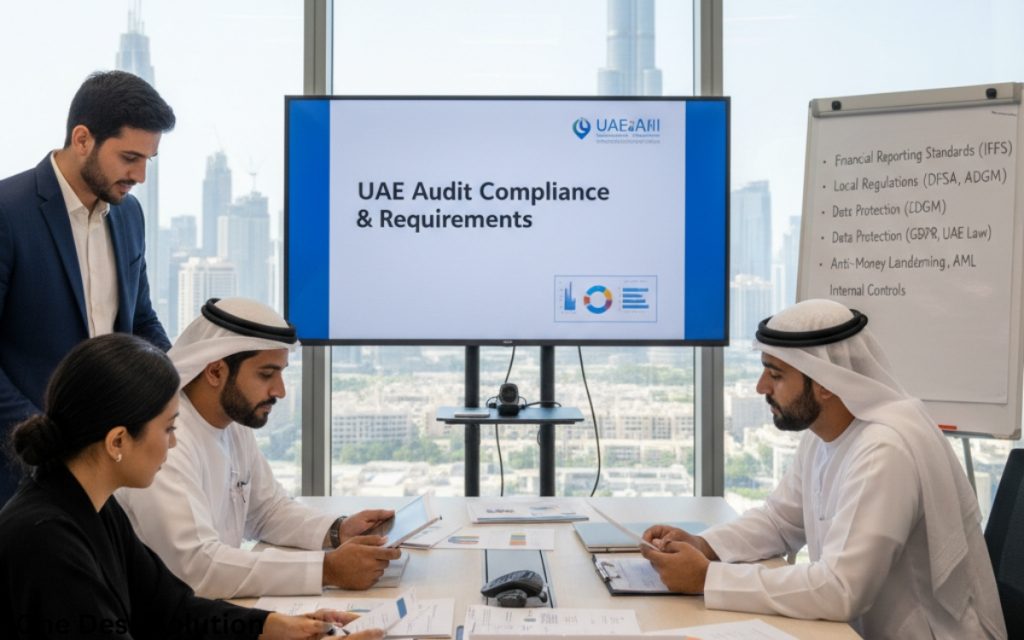
Which Companies Must Have Annual Audits? Complete Compliance Guide
Expert guidance on UAE audit requirements and compliance standards | Updated 2025
📊 Key Takeaway
Understanding annual audit requirements is crucial for UAE business compliance. Companies meeting specific criteria regarding revenue, assets, or legal structure must undergo mandatory audits, while others may benefit from voluntary audits to strengthen financial credibility and investor confidence.
📑 Table of Contents
- Introduction to Annual Audit Requirements
- Companies Required to Have Annual Audits
- Audit Threshold Criteria
- Exemptions and Special Cases
- Annual Audit Process and Timeline
- Benefits of Annual Audits
- Non-Compliance Penalties
- How to Prepare for an Annual Audit
- Frequently Asked Questions
- Related Resources
Understanding Annual Audit Requirements in the UAE
Annual audits serve as a cornerstone of financial transparency and corporate governance in the United Arab Emirates. These comprehensive examinations of financial statements ensure that businesses maintain accurate records, comply with regulatory standards, and provide stakeholders with reliable financial information. The requirement for annual audits varies based on company type, size, and operational structure.
The UAE regulatory framework has evolved significantly to align with international accounting standards while addressing the unique needs of the local business environment. Companies operating in the Emirates must navigate a complex landscape of federal laws, emirate-specific regulations, and free zone requirements. Understanding which entities must undergo annual audits is essential for maintaining compliance and avoiding costly penalties.
Beyond regulatory compliance, annual audits provide substantial value to businesses by identifying financial irregularities, improving internal controls, and enhancing credibility with investors, banks, and business partners. Whether mandatory or voluntary, a properly conducted audit can reveal operational inefficiencies and opportunities for improvement that strengthen your business foundation.
Need Expert Audit Assistance?
Our certified auditors provide comprehensive audit services tailored to your business needs
Companies Required to Have Annual Audits
🏢 Mandatory Audit Categories
The UAE Commercial Companies Law and various regulatory authorities mandate annual audits for specific business entities to ensure financial transparency and protect stakeholder interests.
Public Joint Stock Companies (PJSC)
All Public Joint Stock Companies operating in the UAE must undergo annual audits without exception. These entities, which offer shares to the public, face the highest level of scrutiny due to their broad shareholder base and significant market influence. The audit must be conducted by auditors approved by the Securities and Commodities Authority (SCA) and must cover all aspects of financial operations, including consolidated statements for companies with subsidiaries.
Private Joint Stock Companies (PrJSC)
Private Joint Stock Companies are also subject to mandatory annual audit requirements. While these companies do not publicly trade shares, their structure involves multiple shareholders and significant capital, necessitating independent financial verification. The audit helps protect minority shareholders and ensures that management operates with transparency and accountability.
Limited Liability Companies (LLC) Above Thresholds
Limited Liability Companies must undergo annual audits if they meet or exceed specific financial thresholds. These criteria include revenue exceeding AED 50 million, total assets above AED 50 million, or employing more than 50 employees. Companies meeting any two of these three criteria are required to have their financial statements audited annually. This requirement ensures that substantial LLCs maintain the same level of financial transparency as larger corporate entities.
| Company Type | Audit Requirement | Key Considerations |
|---|---|---|
| Public Joint Stock (PJSC) | Mandatory | SCA-approved auditors, quarterly reviews required |
| Private Joint Stock (PrJSC) | Mandatory | Annual audit by licensed auditors |
| LLC (Above Threshold) | Mandatory | Meet 2 of 3 criteria: Revenue/Assets >AED 50M or >50 employees |
| LLC (Below Threshold) | Optional | Recommended for financing and credibility |
| Free Zone Companies | Varies by Zone | Zone-specific requirements apply |
| Branch Offices | Mandatory | Must audit UAE operations |
| Professional Firms | Mandatory | Requires specialized audit approach |
Branch Offices of Foreign Companies
Foreign companies operating through branch offices in the UAE must conduct annual audits of their UAE operations. These audits must separate UAE-specific financial activities from the parent company's global operations. The requirement ensures that branch offices comply with local tax laws, including UAE corporate tax regulations, and maintain proper documentation for regulatory authorities.
Holding Companies
Holding companies, which own controlling interests in other businesses, must undergo comprehensive audits that include consolidated financial statements. These audits examine not only the holding company's direct financial activities but also evaluate the financial health and reporting accuracy of all subsidiary entities, providing a complete picture of the corporate group's financial position.
Detailed Audit Threshold Criteria
📊 Three-Criteria Test for LLC Audit Requirements
Limited Liability Companies must meet at least TWO of the following three criteria to trigger mandatory audit requirements:
Revenue Threshold
AED 50 Million
Annual revenue exceeding this amount
Asset Threshold
AED 50 Million
Total assets exceeding this value
Employee Threshold
50 Employees
Average workforce exceeding this number
💡 Calculation Tips
- Revenue is calculated on an annual basis including all income streams
- Assets include both current and non-current assets at book value
- Employee count represents the average number over the financial year
- Part-time employees are counted proportionally based on working hours
The threshold criteria are designed to identify companies with significant economic impact or complexity that warrant independent financial verification. Companies approaching these thresholds should proactively consider implementing audit-ready accounting systems and internal controls to ensure smooth transitions when audit requirements become mandatory.
It's important to note that these thresholds are reviewed periodically by regulatory authorities and may be adjusted to reflect economic conditions and inflation. Businesses should stay informed about current requirements by consulting with professional audit firms or checking the latest UAE audit requirements.
Exemptions and Special Cases
Small and Medium Enterprises (SMEs)
Small businesses operating as Limited Liability Companies that fall below the mandatory thresholds are exempt from annual audit requirements. However, these companies must still maintain proper accounting records and may be subject to audit if they apply for certain licenses, seek financing, or participate in government contracts. Many SMEs choose voluntary audits to strengthen their financial credibility and prepare for growth.
⚠️ Important Exemption Considerations
Even if your company is technically exempt, you may still need audits for:
- Bank loan applications and credit facilities
- Visa quota increases from immigration authorities
- Government tender participation and contract bidding
- Investor due diligence for potential partnerships
- Merger and acquisition transactions
Free Zone Variations
Free zone companies follow regulations specific to their jurisdiction. Some free zones require all companies to undergo annual audits regardless of size, while others apply threshold criteria similar to mainland regulations. For example, companies in DIFC (Dubai International Financial Centre) and ADGM (Abu Dhabi Global Market) follow international financial reporting standards with specific audit requirements. Businesses should verify requirements with their free zone authority. Learn more about free zone versus mainland tax implications.
Professional Service Companies
Professional service firms such as legal consultancies, accounting firms, engineering consultancies, and medical practices may have specific audit requirements regardless of size, particularly if they hold professional licenses issued by regulatory bodies. These requirements ensure that firms handling sensitive client matters maintain appropriate financial controls and professional standards.
| Entity Type | Exemption Status | Conditions |
|---|---|---|
| SME LLCs Below Threshold | Exempt | Must not meet 2 of 3 threshold criteria |
| Sole Proprietorship | Generally Exempt | May require for specific licenses |
| Civil Companies | Generally Exempt | Unless specified by professional regulator |
| Micro Free Zone Entities | Zone Dependent | Check specific free zone requirements |
Annual Audit Process and Timeline
🔄 Step-by-Step Audit Process
Step 1
Auditor Appointment
Select and appoint licensed auditor
Step 2
Planning & Risk Assessment
Auditor reviews business operations
Step 3
Fieldwork
Testing transactions and controls
Step 4
Report & Filing
Issue audit opinion and file returns
Preparation Phase
The audit process begins with selecting a qualified auditor registered with the UAE Ministry of Economy or relevant free zone authority. Companies should appoint auditors early in the financial year or immediately after year-end to ensure adequate time for completion. The preparation phase involves organizing financial records, reconciling accounts, and ensuring all supporting documentation is accessible and properly maintained.
Fieldwork and Testing
During fieldwork, auditors examine financial transactions, test internal controls, verify asset existence, confirm liabilities, and assess the appropriateness of accounting policies. This phase typically requires significant interaction between company staff and audit teams. Companies should designate a primary contact person to coordinate document requests and facilitate auditor access to systems and personnel.
Timeline Requirements
Most UAE companies must file audited financial statements within specific timeframes following their financial year-end. Public companies typically face stricter deadlines, often required to publish audited statements within three to four months of year-end. Private companies generally have more flexibility but should complete audits within six months to comply with tax record maintenance requirements and meet stakeholder expectations.
⏰ Critical Deadlines
- Public companies: 90-120 days after year-end for audit completion
- Private companies: 180 days after year-end recommended
- Corporate tax returns: Must include audited statements within 9 months of year-end
- License renewals: Often require current audited statements
Strategic Benefits of Annual Audits
Enhanced Financial Credibility
Audited financial statements significantly enhance a company's credibility with banks, investors, suppliers, and customers. Financial institutions often require audited statements for credit approvals and favorable lending terms. Investors conducting due diligence place greater confidence in audited financials, potentially leading to better valuations and investment terms. The independent verification that audits provide can be a competitive advantage when bidding for contracts or establishing strategic partnerships.
Improved Internal Controls
The audit process naturally strengthens internal controls by identifying weaknesses in accounting systems, segregation of duties, and approval processes. Auditors provide management letters highlighting areas for improvement, helping companies prevent fraud, reduce errors, and enhance operational efficiency. These improvements often result in cost savings that exceed the audit fees over time.
✅ Key Business Advantages
- Easier access to bank financing and better interest rates
- Increased investor confidence and higher company valuations
- Early detection of financial irregularities and fraud prevention
- Better decision-making through reliable financial data
- Compliance with regulatory requirements avoiding penalties
- Preparation for business expansion or succession planning
Tax Compliance and Planning
With the introduction of corporate tax in the UAE, audited financial statements have become even more critical. Audits ensure accurate tax computation, proper documentation of deductions, and compliance with transfer pricing requirements for related party transactions. Companies can leverage audit findings for strategic tax planning, identifying opportunities to optimize their tax position legally. Understanding corporate tax penalties in the UAE emphasizes the importance of accurate audited statements.
Business Growth Facilitation
Audited statements are often prerequisite for significant business milestones including mergers, acquisitions, public offerings, or selling the business. Regular audits create a clean financial history that facilitates these transactions and can significantly reduce due diligence time and costs when opportunities arise.
Non-Compliance Penalties and Consequences
⚠️ Serious Consequences of Non-Compliance
Failing to conduct mandatory annual audits or submit audited financial statements on time can result in severe penalties including monetary fines, license suspension, and legal complications that can significantly impact business operations.
Financial Penalties
Companies that fail to comply with annual audit requirements face substantial financial penalties imposed by regulatory authorities. The Ministry of Economy can impose fines ranging from AED 20,000 to AED 500,000 depending on the severity and duration of non-compliance. Free zone authorities may impose their own penalty structures, which can include daily fines for continued non-compliance. These penalties accumulate over time and can become a significant financial burden.
License Suspension and Revocation
Persistent failure to submit audited financial statements can lead to trade license suspension or, in extreme cases, revocation. When a license is suspended, companies cannot legally conduct business operations, sign new contracts, or process visa applications. The process of reinstating a suspended license requires settling all penalties, submitting outstanding audited statements, and may involve additional scrutiny from authorities, causing substantial business disruption.
| Violation Type | Penalty Range | Additional Consequences |
|---|---|---|
| Failure to Appoint Auditor | AED 20,000 - AED 100,000 | Restriction on business activities |
| Late Submission of Audit | AED 10,000 - AED 50,000 | Daily penalties may apply |
| Incomplete Audit Documentation | AED 5,000 - AED 25,000 | Mandatory resubmission |
| Repeated Non-Compliance | AED 100,000 - AED 500,000 | License suspension threat |
| Fraudulent Financial Reporting | Criminal prosecution | Imprisonment, permanent ban |
Tax and VAT Implications
Non-compliance with audit requirements can trigger tax-related issues. The Federal Tax Authority requires audited financial statements for corporate tax assessments when applicable. Companies without proper audited statements may face difficulties defending their tax positions, potentially resulting in higher tax assessments and penalties. Similarly, VAT return filing accuracy may be questioned without proper audit trails, leading to compliance issues.
Reputational Damage
Beyond regulatory penalties, non-compliance severely damages business reputation. Banks may freeze credit facilities, suppliers may demand cash payments instead of credit terms, and customers may lose confidence in the company's stability. Public disclosure of penalties or license suspensions can be particularly damaging for companies seeking investment or competing for contracts. The long-term reputational impact often exceeds the direct financial cost of penalties.
Legal Liability
Company directors and managers can face personal liability for persistent non-compliance with audit requirements. In cases of fraud or intentional misrepresentation, individuals may face criminal charges, travel bans, and imprisonment. Even in less severe cases, shareholders can pursue civil action against management for losses resulting from non-compliance.
How to Prepare for an Annual Audit
🎯 Audit Preparation Checklist
Proper preparation significantly reduces audit time, costs, and stress while ensuring a smooth audit process and favorable outcomes.
Financial Record Organization
Begin by ensuring all financial records are complete, accurate, and properly organized. This includes general ledgers, subsidiary ledgers, bank statements, invoices, receipts, and contracts. Implement a systematic filing system, whether digital or physical, that allows quick retrieval of documents. Reconcile all accounts including bank accounts, accounts receivable, accounts payable, and inventory before the audit begins. Address any discrepancies or unexplained differences proactively.
Documentation Requirements
Auditors will require extensive documentation to verify financial statement assertions. Prepare comprehensive files for major transactions, fixed asset registers with supporting purchase documents, loan agreements with payment schedules, lease contracts, and employee payroll records. For companies with related party transactions, prepare detailed documentation showing commercial substance and arm's length pricing. Proper tax invoice formats and documentation are essential.
📋 Essential Documents to Prepare
- Complete general ledger and trial balance for the year
- Bank statements and reconciliations for all accounts
- Accounts receivable aging and supporting invoices
- Accounts payable aging and payment records
- Fixed asset register with depreciation schedules
- Inventory counts and valuation documentation
- Loan agreements and debt schedules
- Board minutes and shareholder resolutions
- Contracts for significant transactions
- Related party transaction documentation
- Tax returns including VAT and corporate tax
- License and registration documents
Internal Review Process
Conduct an internal review before the auditor arrives to identify and correct obvious errors or inconsistencies. This pre-audit review should include verifying that accounting policies have been applied consistently, checking mathematical accuracy of financial statements, ensuring proper cut-off procedures for year-end transactions, and confirming that all significant transactions are properly documented and authorized.
Staff Coordination
Designate key personnel to coordinate with auditors and ensure their availability during the audit period. Brief staff on the audit process and their expected roles. Finance team members should understand the importance of timely and accurate responses to auditor inquiries. Consider scheduling the audit during a period when key finance personnel are available rather than during vacation periods or peak business times.
System Access and Workspace
Provide auditors with appropriate access to accounting systems, including read-only access to financial software when possible. Designate a suitable workspace with necessary equipment such as computers, printers, and secure storage for audit files. Ensure auditors have access to key personnel and can schedule interviews with management as needed throughout the audit process.
Year-Round Preparation
The most successful audits result from year-round preparation rather than last-minute scrambles. Implement strong monthly closing procedures, maintain organized documentation throughout the year, and address accounting issues as they arise rather than accumulating problems. Consider engaging with auditors for interim reviews or consultations on complex transactions before year-end.
Ready for Your Annual Audit?
Let our expert team handle your audit requirements with professionalism and efficiency
Frequently Asked Questions
An audit provides the highest level of assurance on financial statements through comprehensive testing of transactions, internal controls, and account balances. Auditors express an opinion on whether financial statements present a true and fair view. A review, on the other hand, provides limited assurance through analytical procedures and inquiries without extensive testing. Reviews are less comprehensive and less expensive than audits but also provide lower assurance. For companies meeting mandatory audit thresholds, a review is not sufficient to meet compliance requirements.
Audit costs vary significantly based on company size, complexity, transaction volume, and number of locations. Small companies with straightforward operations may pay between AED 15,000 to AED 30,000 for annual audits. Medium-sized companies typically pay AED 30,000 to AED 80,000, while large or complex organizations can pay AED 100,000 or more. Factors affecting cost include the number of bank accounts, volume of transactions, quality of internal records, number of subsidiaries, and whether the company operates in multiple jurisdictions. First-year audits are often more expensive due to the need to understand the business and establish audit procedures. To optimize costs, maintain organized records year-round and provide efficient cooperation during the audit.
Yes, companies have the right to change auditors, though frequent changes are generally discouraged as they can raise questions among stakeholders and increase costs. Many companies rotate auditors every three to five years to maintain independence and gain fresh perspectives. When changing auditors, ensure proper communication between outgoing and incoming audit firms, provide comprehensive documentation of prior year audits, and allow sufficient transition time. Some companies are required to rotate audit partners (not necessarily firms) every certain number of years to maintain independence. If considering a change, evaluate whether the issue is truly with the auditor or could be resolved through better communication and preparation.
A qualified audit opinion indicates that auditors found material issues preventing them from issuing an unqualified (clean) opinion, but the issues are not pervasive enough to warrant an adverse opinion. Qualified opinions can result from limitations in audit scope, disagreements with management on accounting treatments, or material misstatements in specific areas. Consequences may include difficulties obtaining financing, regulatory scrutiny, investor concerns, and potential license renewal complications. To address a qualified opinion, work with auditors to understand the specific issues, implement corrective measures for future periods, and provide clear explanations to stakeholders. For serious qualifications, consider engaging additional professional advisors to remediate the underlying problems.
Generally, one comprehensive annual audit serves multiple purposes including license renewal, corporate tax compliance, and stakeholder reporting. The audited financial statements prepared under UAE accounting standards (or IFRS where applicable) can be used for submitting corporate tax returns, renewing trade licenses, securing financing, and meeting other regulatory requirements. However, some situations may require specific reporting formats or additional procedures. For example, if your company falls under specific VAT thresholds requiring detailed VAT reporting, or if you're applying for certain government contracts with specialized reporting requirements. Discuss your specific needs with your auditor to ensure the audit scope covers all necessary requirements. Understanding VAT registration thresholds helps determine if additional compliance is needed.
📚 Related Resources
Explore these comprehensive guides to enhance your understanding of UAE business compliance:
- Complete Guide to Audit Requirements for UAE Companies
- UAE Corporate Tax 2025: Everything You Need to Know
- Professional VAT Return Filing Services in Dubai
- What Tax Records Must UAE Companies Maintain?
- Understanding Corporate Tax Penalties in UAE
- Correct Tax Invoice Format in UAE
- Expert VAT Consultant Services in Dubai
- How to Get an Audit License in UAE
- Free Zone vs Mainland: Tax Implications Compared
- Advantages of DIFC Company Setup
- VAT Registration Thresholds in UAE
- Calculating Cost of Goods Sold for Retail Businesses
- Permits Required for Industrial Businesses
- Factory License and Compliance Requirements
Why Choose One Desk Solution?
At One Desk Solution, we provide comprehensive audit and compliance services tailored to your business needs. Our certified auditors bring years of experience across diverse industries and understand the unique requirements of the UAE regulatory environment.
✓ Expert Team
Qualified auditors with extensive UAE experience
✓ Comprehensive Services
From audit to tax compliance under one roof
✓ Timely Delivery
Meet all regulatory deadlines without stress
✓ Competitive Pricing
Quality service at transparent, fair rates
Get Started Today
Contact us for a free consultation and discover how we can simplify your audit compliance
Visit our office or schedule a virtual consultation at your convenience