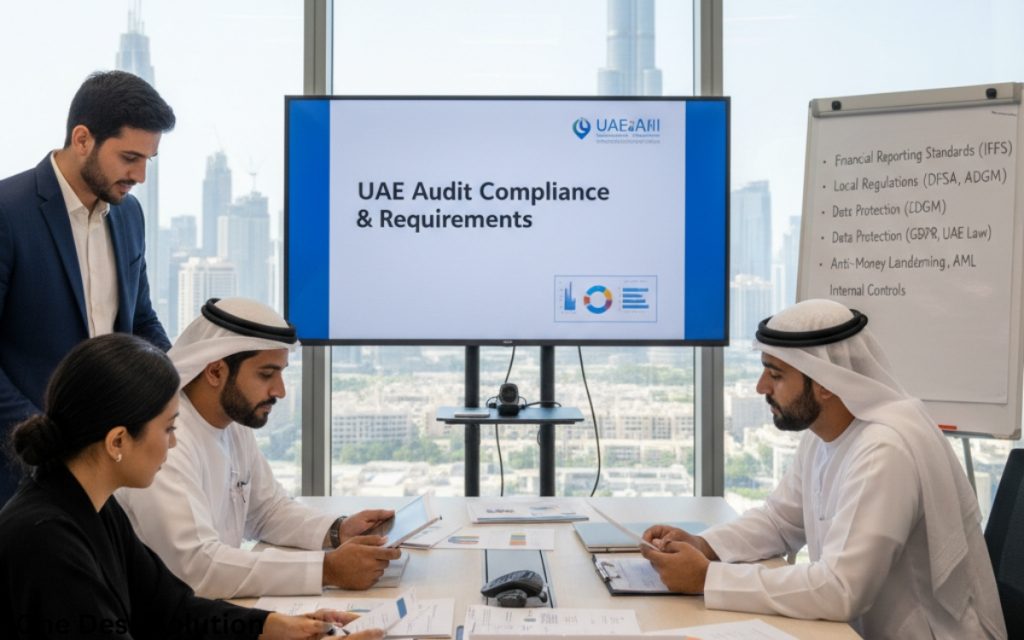
How to Navigate the Audit Process Smoothly in the UAE
Preparation, Fieldwork, Communication & a Realistic Audit Timeline — 2026 Guide
Quick Summary: A smooth audit in the UAE isn't about luck — it's almost entirely determined by how well-prepared a company is before fieldwork even starts. Reconciled accounts, organized supporting documents, and a single point of contact for the audit team cut weeks off a process that otherwise drags on through repeated follow-up requests. The businesses that struggle most are usually reconstructing records during the audit itself, rather than simply handing over records that were already in order. This guide breaks down exactly how to navigate the audit process smoothly in the UAE, from preparation through to the final report.
Most of what makes a UAE audit feel painful has little to do with the audit standard being applied and everything to do with how the company shows up to it. An auditor working from clean, reconciled books with clear supporting documentation can usually complete fieldwork efficiently. An auditor working from a messy general ledger, missing invoices, and unreconciled bank accounts has to spend most of their time reconstructing basic facts before they can even test anything.
The companies that consistently report smooth audits tend to do three things well: they prepare documentation proactively rather than reactively, they assign one knowledgeable point of contact rather than routing every question through multiple people, and they treat audit findings as useful information rather than something to argue down to zero.
This guide covers preparation, what happens during fieldwork, how to communicate effectively with your auditor, and a realistic timeline to plan around. Our audit and assurance services team works to make this process as efficient as possible for our clients.
Want your next audit to actually go smoothly?
Table of Contents
- What "Smooth" Actually Means in a UAE Audit
- Before the Audit: Preparation Checklist
- Choosing & Engaging Your Auditor
- What Happens During Fieldwork
- Communicating with Auditors Effectively
- Common Bottlenecks That Slow Audits Down
- After the Audit: Reviewing Findings & Next Steps
- A Realistic Audit Timeline
- Choosing the Right Audit Partner
- FAQs
1. What "Smooth" Actually Means in a UAE Audit
A smooth audit doesn't mean no findings — it means the process moves through planning, fieldwork, and reporting without repeated delays caused by missing information, unclear ownership of tasks, or last-minute document scrambles. The audit opinion itself is a separate outcome from how efficiently the process gets there.
2. Before the Audit: Preparation Checklist
- Reconcile all bank accounts, payment processors, and the general ledger before fieldwork begins
- Organize supporting documentation for significant transactions, contracts, and related-party dealings
- Prepare a trial balance and draft financial statements in advance, rather than during fieldwork
- Gather prior-year audit findings and confirm each has been addressed or explained
- Document key accounting policies (revenue recognition, inventory valuation, provisions) in writing
3. Choosing & Engaging Your Auditor
| Consideration | Why It Matters |
|---|---|
| Sector experience | An auditor familiar with your industry asks sharper, more relevant questions and moves faster |
| Free zone approved list status | Confirms the engagement will actually satisfy your license renewal requirements |
| Engagement letter clarity | Sets clear scope, timeline, and responsibilities before fieldwork starts |
| Communication style fit | A responsive, clear communicator reduces back-and-forth delays significantly |
4. What Happens During Fieldwork
| Stage | What It Involves |
|---|---|
| Planning | Auditor reviews the business and identifies key risk areas to focus testing on |
| Document requests | Initial list of supporting documents and schedules needed from the company |
| Testing | Sample or full-population testing of transactions against supporting evidence |
| Follow-up queries | Clarification requests on specific items identified during testing |
| Draft findings | Preliminary observations shared with the company before the final report |
5. Communicating with Auditors Effectively
- Assign one internal point of contact who understands the business and can respond promptly to queries
- Respond to document requests in batches rather than trickling information over days or weeks
- Flag known problem areas proactively rather than waiting for the auditor to discover them
- Ask for clarification immediately if a request is unclear, rather than guessing and resubmitting incorrect information
6. Common Bottlenecks That Slow Audits Down
- Unreconciled bank accounts or intercompany balances discovered only during fieldwork
- Missing or incomplete supporting documentation for significant or unusual transactions
- Multiple internal staff responding inconsistently to the same auditor query
- Delayed responses to follow-up requests, pushing the whole timeline back
- Last-minute changes to accounting policy or classification that require re-testing
7. After the Audit: Reviewing Findings & Next Steps
Once fieldwork concludes, the auditor issues draft findings and, ultimately, the audit report and opinion. Reviewing findings isn't just a formality — recurring findings, control weaknesses, or classification issues flagged this year are worth addressing proactively before the next audit cycle, rather than treating each audit as an isolated event.
8. A Realistic Audit Timeline
| Phase | Typical Duration (Well-Prepared Company) |
|---|---|
| Planning & engagement | A few days to a week |
| Document preparation (company side) | Ideally completed before fieldwork starts, not during it |
| Fieldwork | Varies with company size and complexity, typically faster with clean records |
| Draft report & review | A short period for findings discussion and clarification |
| Final report issuance | Shortly after all open items are resolved |
9. Choosing the Right Audit Partner
A smooth audit starts well before fieldwork, with a partner who sets clear expectations and a company that prepares proactively. Pairing audit support with ongoing accounting and bookkeeping services and tax services keeps your records audit-ready year-round, rather than scrambled together once a year.
Get a free audit-readiness review before your next audit cycle.
Frequently Asked Questions
What's the single biggest factor in a smooth UAE audit?
Preparation before fieldwork begins — reconciled accounts, organized supporting documentation, and clear accounting policies consistently make the biggest difference to how quickly and smoothly an audit proceeds.
How long does a typical company audit take in the UAE?
Timelines vary significantly by company size and complexity, but well-prepared companies with clean, reconciled records going into fieldwork consistently experience faster audits than those reconstructing records during the process.
Who should be the point of contact for an audit within the company?
Ideally one person who understands the business's finances well and can respond promptly and consistently to the auditor's queries, rather than routing requests through multiple staff who may give inconsistent answers.
What should a company do with audit findings after the report is issued?
Review recurring findings or control weaknesses and address them before the next audit cycle, rather than treating each year's audit as a fresh, isolated exercise disconnected from prior findings.
Can an audit be rushed if a company needs the report quickly?
Fieldwork timelines depend on company complexity and record quality, and rushing testing can compromise the audit's reliability — the more effective way to speed up an audit is thorough preparation before fieldwork starts, not compressing the testing itself.
Related Reading
Ready to make your next audit painless?
Talk to our audit team today.