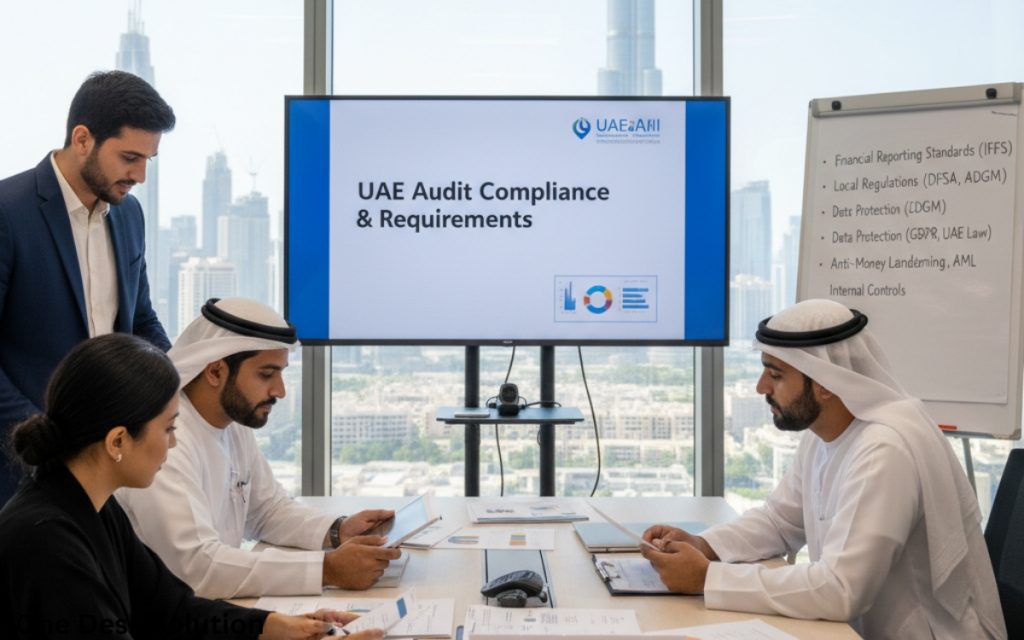
The Future of Audit Services in Dubai
Technology, tax, regulation, sustainability, and what audit changes mean for your business
Quick Summary: Audit services in Dubai are shifting towards data analytics and automation, closer links with Corporate Tax and regulation, broader assurance including sustainability, and more continuous, risk-focused work. Businesses with clean digital records and a clear understanding of their audit duties will benefit most. This article explains the key trends and gives a readiness roadmap.
Audit in Dubai is changing. A few years ago, many small businesses saw an audit as an annual formality. Today Corporate Tax, digital reporting, sophisticated lenders, and new technology are reshaping what an audit involves and who needs one.
For business owners, this is both a challenge and an opportunity. Companies that keep clean digital records and understand their audit triggers can expect faster, less disruptive audits, and better insight from the process.
This article looks at the forces shaping the future of audit services in Dubai: technology and AI, tax and regulatory demand, sustainability assurance, fraud and cyber risk, and new delivery models. It ends with a practical readiness roadmap. Our audit and assurance services team helps Dubai businesses stay ahead of the curve.
Want to be audit-ready for what comes next? Speak to our team.
Table of Contents
- Why the Audit Landscape Is Changing
- Key Forces Shaping Audit in Dubai
- Technology, Data, and AI in Audit
- Corporate Tax and Regulatory Demand
- Sustainability and Non-Financial Assurance
- Fraud, Cyber, and Controls
- From Traditional to Future-Ready Audit
- People, Skills, and Delivery Models
- What It Means for Your Business
- Future-Readiness Roadmap
- Signals to Watch
- Common Mistakes
- Frequently Asked Questions
1. Why the Audit Landscape Is Changing
Dubai's audit market is evolving quickly. Corporate Tax brought new reporting and audit duties, regulators and free zones keep refining requirements, banks and investors expect better assurance, and technology is changing how audits are done. For businesses, the question is no longer only "do we need an audit?" but "how do we make audits faster, more useful, and less disruptive?"
- More businesses are in scope for audited financial statements
- Auditors increasingly rely on data analytics and automation
- Stakeholders ask for assurance beyond the financial statements
- Clean digital records are becoming a competitive advantage
For the current rules, see our comparison of free zone vs mainland audit requirements and the figures in audit compliance statistics for UAE companies. Our audit and assurance services team helps companies prepare for what is coming.
About this article: This is a forward-looking view based on current trends and published developments. It describes likely directions, not guaranteed outcomes. Rules, deadlines, and technologies can change, so please verify specifics with the relevant authority or your auditor.
2. Key Forces Shaping Audit in Dubai
| Force | What is happening | Likely effect on audit |
|---|---|---|
| Corporate Tax | New tax reporting and audited statement duties for certain taxable persons | More entities need audits and tax-aware financial reporting |
| Digital tax administration | Authorities are moving towards more digital reporting and e-invoicing | More structured data available for analytics and risk checks |
| Technology and AI | Automation of testing, matching, and document review | Faster audits with more focus on judgement areas |
| Sustainability reporting | Growing expectations on ESG disclosures | Demand for assurance on non-financial information |
| Stakeholder expectations | Banks, investors, and partners ask for better reporting | Audits seen as value-adding, not only compliance |
| Talent and delivery | Skills shifting towards data, tax, and technology | Hybrid and remote audit models |
Want to be audit-ready as the rules and technology evolve? Speak to our team.
3. Technology, Data, and AI in Audit
What technology can do
- Test full populations of transactions instead of samples
- Match invoices, bank entries, and VAT returns automatically
- Flag unusual entries, duplicates, and outliers
- Extract data from documents and contracts
- Share requests and evidence through secure portals
What still needs people
- Professional judgement on estimates and valuations
- Understanding the business and its risks
- Challenging management's assumptions
- Explaining findings and recommendations
- Ethics, independence, and accountability for the opinion
- AI tools need governance: data privacy, accuracy checks, and clear human review
- Poor data quality limits what analytics can achieve
- Over-reliance on automation without understanding can create blind spots
Expected change in audit emphasis over the coming years (illustrative)
Illustrative view of expected direction, not measured data or a forecast of exact outcomes.
4. Corporate Tax and Regulatory Demand
- Audited financial statements have become relevant for certain categories of taxable persons, so more companies are in scope than before
- Auditors and tax advisers are working more closely because tax computations start from audited accounts
- Free zones and regulators continue to refine their own audit and reporting expectations
- Groups face consolidation, transfer pricing, and special purpose reporting needs; see multinational company transfer pricing
- Regulated sectors such as funds and advisers face detailed assurance; see fund accounting audit and financial advisor audit services
Please verify before relying on this: Audit thresholds and tax-related reporting rules are set by UAE legislation and Ministry of Finance and FTA guidance. Confirm current requirements for your business. See our tax services and the complete guide to tax compliance.
5. Sustainability and Non-Financial Assurance
| Area | Possible assurance needs |
|---|---|
| Sustainability reports | Limited or reasonable assurance on selected metrics |
| Governance and ethics | Reviews of policies and controls |
| Supply chain and compliance | Assurance on specific compliance claims |
| Cybersecurity and data protection | Independent reviews of controls |
| Investor and lender reporting | Agreed-upon procedures on defined information |
Expectations vary by sector and by regulator, so check which disclosures apply to you.
6. Fraud, Cyber, and Controls
- Auditors are expected to pay close attention to fraud risk and management override
- Reliance on cloud systems makes IT general controls a core audit topic
- Cyber incidents can affect records and reporting, so controls matter
- Businesses benefit from clear segregation of duties and documented processes
- Internal audit and periodic compliance reviews help bridge the gap between annual audits
7. From Traditional to Future-Ready Audit
| Area | Traditional approach | Future-ready approach |
|---|---|---|
| Timing | Once a year, after year-end | Ongoing, with interim testing and continuous data checks |
| Evidence | Paper documents and email requests | Digital records and secure portals |
| Testing | Samples | Full population analytics where suitable |
| Focus | Compliance and sign-off | Risk, insight, and business value |
| Location | Mostly on site | Hybrid and remote where appropriate |
| Relationship | Annual contact | Regular dialogue on risks and changes |
8. People, Skills, and Delivery Models
- Auditors need stronger data, tax, IT, and sector skills alongside accounting knowledge
- Specialists, such as valuation, IT, and tax experts, are used more often inside audit teams
- Hybrid and remote work reduce travel but need secure data sharing
- Companies need finance staff who can supply clean data and explain their records
- Good providers keep staff trained on changes in standards and local rules
9. What It Means for Your Business
| Business type | What to expect | What to do now |
|---|---|---|
| Small mainland company | Growing expectation of reliable records, possible audit as revenue grows | Set up good bookkeeping and review audit triggers |
| Free zone company | Audit rules keep evolving by zone and tax status | Check zone and tax requirements at each renewal; see top free zones in Dubai comparison |
| Growing group | Consolidation, transfer pricing, and tax group reporting | Align accounting policies and data across entities |
| Regulated firm | Deeper assurance on compliance and controls | Strengthen governance and evidence trails |
| New business | Audit needs may start sooner than expected | Pick the right activity and structure; see choosing the right business activity in Dubai |
Founders can learn how to plan from the start with how a UK entrepreneur can establish a DMCC free zone company and our business setup service.
10. Future-Readiness Roadmap
Digitise records
Move to cloud accounting and digital documents. See accounting and bookkeeping services.
Clean the data
Reconcile monthly, fix tax codes, and document processes.
Know your triggers
Map audit duties for each entity and keep a calendar.
Strengthen controls
Segregation of duties, access controls, and review steps.
Talk to your auditor early
Plan interim work and agree timetables.
Our advisory and consultancy services can help design this roadmap.
11. Signals to Watch
- Updates to audit thresholds and tax reporting rules from the Ministry of Finance and FTA
- Free zone and regulator announcements on audit and reporting
- Progress of digital tax reporting and e-invoicing initiatives
- Developments in sustainability reporting expectations
- New guidance on AI use and data protection in professional services
- Changes in rules on auditor registration and independence
12. Common Mistakes
- Treating audit as a once-a-year scramble instead of a year-round process
- Waiting for the rules to become mandatory before improving records
- Assuming technology removes the need for good bookkeeping
- Choosing an auditor only on price without checking capability and independence
- Ignoring data protection when sharing records digitally
- Not reviewing audit duties as revenue, structure, or activities change
Frequently Asked Questions
What is the future of audit services in Dubai?
Audit in Dubai is moving towards more technology and data analytics, closer links with tax and regulation, broader assurance including sustainability, and more continuous, risk-focused work. Good digital records will make audits faster and more useful.
Will AI replace auditors in the UAE?
AI is expected to automate routine testing and data analysis, but professional judgement, independence, and accountability for the audit opinion remain with qualified auditors. The auditor's role is likely to shift towards judgement and advisory work.
How has Corporate Tax changed audit requirements in the UAE?
Corporate Tax rules have made audited financial statements relevant for certain categories of taxable persons, and tax computations start from reliable accounts. Check current Ministry of Finance and FTA guidance for your thresholds and category.
How can my company prepare for future audit requirements?
Digitise records, reconcile monthly, keep tax codes and processes clean, document controls, map your audit duties and calendar, and talk to your auditor early about timing and expectations.
Will sustainability reporting need audits in Dubai?
Expectations are growing, and some sectors and stakeholders already ask for assurance on sustainability information. Requirements vary by regulator and company type, so check which disclosures apply to you.
Related Reading
- Top Free Zones in Dubai Comparison
- Choosing the Right Business Activity in Dubai
- Audit Compliance Statistics for UAE Companies
- Free Zone vs Mainland Audit Requirements
- How a UK Entrepreneur Can Establish a DMCC Free Zone Company
- Audit and Assurance Services
- Tax Services
- All One Desk Solution Services
Ready for faster, smarter audits? Let's talk.