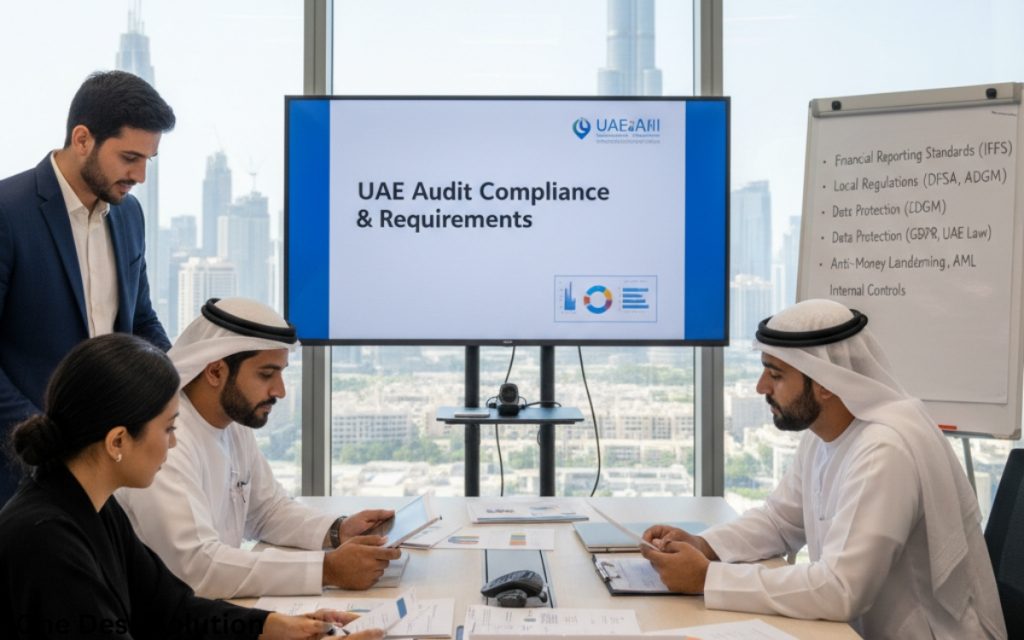
External Audit Engagement Checklist UAE
A practical checklist for managing your statutory audit engagement from auditor selection to signed report
Quick Summary: A well-managed external (statutory) audit engagement depends on more than just handing over documents — it requires confirming auditor eligibility, agreeing scope and timeline upfront, preparing records properly, and tracking the engagement through to the signed report and any management letter points. This checklist covers each stage from the client's side, so your business controls the process rather than scrambling to react to auditor requests.
An external audit engagement runs smoothest when the client side is as organized as the audit firm's own methodology. From confirming your auditor is properly licensed and approved for your Free Zone, through to closing out management letter points after the signed report is issued, each stage has specific actions that prevent delays and surprises.
This checklist is written for business owners and finance teams managing the engagement from the client side — distinct from the internal audit planning process covered in our internal audit planning checklist, which addresses a company's own ongoing risk-review function rather than the annual statutory audit.
At One Desk Solution, our audit and assurance team manages statutory audit engagements for UAE businesses end to end — and also helps clients prepare their own side of the process when working with another audit firm.
Preparing for your statutory audit and want to make sure nothing falls through the cracks? Let's run through your readiness.
Table of Contents
- The External Audit Engagement Stages
- Pre-Engagement: Auditor Selection & Letter
- Planning & Scope Confirmation
- Document Preparation Checklist
- Fieldwork Coordination
- Closing: Representation Letter & Draft Report
- Post-Audit: Management Letter Follow-Up
- Common Mistakes During the Engagement
- Frequently Asked Questions
1. The External Audit Engagement Stages
2. Pre-Engagement: Auditor Selection & Letter
- Confirm the auditor's Ministry of Economy registration and, if applicable, approval on your specific Free Zone's auditor list
- Check independence — the auditor should have no employment, ownership, or close personal relationship with company management
- Review and sign the engagement letter, confirming scope, responsibilities, fees, and reporting deadline
- Clarify whether the engagement includes advisory commentary on findings or only the signed audit opinion
3. Planning & Scope Confirmation
- Agree the audit period and any specific areas of focus (new revenue streams, related-party transactions, significant estimates)
- Confirm materiality thresholds the auditor will apply
- Agree the fieldwork schedule and key milestone dates, working backward from your license renewal or filing deadline
- Identify key internal contacts for each area (finance, payroll, procurement) to avoid bottlenecks during fieldwork
Why this matters: Agreeing materiality and scope upfront avoids disputes later about why certain transactions were tested in detail while others were only sampled — a common source of friction mid-engagement.
4. Document Preparation Checklist
- ☐ General ledger and trial balance for the full audit period
- ☐ Bank statements and reconciliations
- ☐ Sales and purchase invoices with supporting contracts
- ☐ Payroll records and end-of-service/gratuity calculations — see our leave encashment guide for related calculations
- ☐ Fixed asset register and depreciation schedules
- ☐ Prior year audited financial statements
- ☐ VAT returns and Corporate Tax filings for the period
- ☐ Board/shareholder resolutions relevant to the period (dividends, capital changes, major transactions)
- ☐ Related-party transaction details and supporting agreements
Not sure if your records are complete enough to hand over for fieldwork? We can run a pre-audit readiness check first.
5. Fieldwork Coordination
- Designate a single internal point of contact to field auditor queries and avoid duplicated or conflicting responses
- Set an internal turnaround target for responding to auditor information requests
- Track open queries in a shared log so nothing is missed as fieldwork progresses
- Schedule interim check-ins with the audit team to surface issues before they become late-stage surprises
6. Closing: Representation Letter & Draft Report
- Review the draft financial statements and audit opinion carefully before signing anything
- Review and sign the management representation letter, confirming the completeness and accuracy of information provided
- Clarify any proposed adjusting entries and their impact on the final reported figures
- Confirm the final signed report format matches what your Free Zone authority, bank, or regulator requires
7. Post-Audit: Management Letter Follow-Up
- Review any management letter issued alongside the audit opinion, covering control weaknesses or process recommendations
- Assign owners and deadlines for addressing each point raised
- Track remediation progress so next year's audit doesn't repeat the same findings
- Feed resolved issues back into internal controls documentation for ongoing reference
Why this matters: Management letter points that go unaddressed tend to resurface in the following year's audit, often with auditors escalating their concern if the same weakness persists across multiple cycles.
8. Common Mistakes During the Engagement
- Starting document preparation only once the auditor requests it, rather than ahead of the engagement kickoff
- Not designating a single internal contact, leading to duplicated or inconsistent responses to auditor queries
- Signing the engagement letter without clarifying scope boundaries, leading to disputes over fee overruns later
- Reviewing the draft report only superficially before signing the management representation letter
- Ignoring management letter points until the next audit cycle surfaces them again
Frequently Asked Questions
What is an engagement letter in a statutory audit, and why does it matter?
An engagement letter is the formal agreement between your company and the audit firm, setting out the scope of work, responsibilities, fees, and reporting deadlines. Reviewing it carefully before signing helps avoid disputes later about what was and wasn't included in the agreed fee.
What documents should I prepare before my audit fieldwork begins?
At minimum: the general ledger and trial balance, bank reconciliations, sales and purchase invoices, payroll and gratuity records, the fixed asset register, prior year audited financials, and VAT/Corporate Tax filings for the period. Preparing these in advance significantly speeds up fieldwork.
What is a management representation letter?
It's a formal letter signed by company management confirming the completeness and accuracy of the information and records provided to the auditor during the engagement. It's typically signed near the end of the engagement, just before the final report is issued.
What should I do with a management letter after the audit is complete?
Review each point raised, assign an internal owner and deadline for addressing it, and track progress throughout the year. Unresolved management letter points often resurface — sometimes with greater concern — in the following year's audit if left unaddressed.
How long does a typical external audit engagement take from start to finish?
This varies with business size and record quality, but a straightforward annual audit for a small to mid-sized company can often be completed within a few weeks of document submission, while larger or first-year engagements can take longer, especially if opening balances need extensive verification.
Related Reading
Ready to run a smooth, well-organized statutory audit engagement this year? Let's get you prepared.