Audit Committee Formation Requirements for UAE Companies
Complete Guide to Corporate Governance Compliance in the UAE
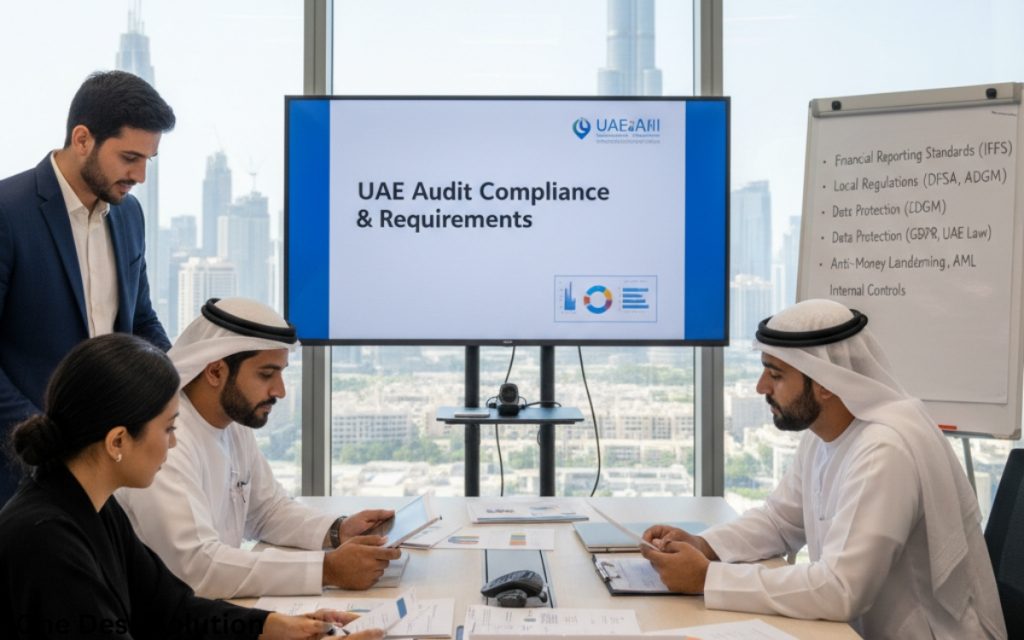
The United Arab Emirates has established itself as a global business hub, attracting thousands of companies across various sectors. With this growth comes increased regulatory scrutiny and corporate governance requirements. One critical aspect of corporate governance in the UAE is the formation of audit committees, which play a vital role in ensuring financial transparency, regulatory compliance, and organizational accountability.
Understanding audit committee formation requirements is essential for companies operating in the UAE, whether they are public joint-stock companies, private entities, or businesses in free zones. This comprehensive guide explores the legal framework, composition requirements, responsibilities, and best practices for establishing and maintaining effective audit committees in the UAE.
Need Expert Help with Audit Committee Formation?
Contact One Desk Solution for professional guidance on corporate governance compliance in the UAE.
Call Us: +971-52 797 1228 WhatsApp UsThis guide provides comprehensive insights into audit committee requirements, helping UAE companies establish robust governance frameworks that meet regulatory standards and enhance stakeholder confidence.
Table of Contents
- What is an Audit Committee?
- Legal Framework in UAE
- Which Companies Must Form Audit Committee?
- Composition Requirements
- Key Responsibilities
- Formation Process: Step-by-Step
- Audit Committee Charter Essentials
- Meeting Requirements & Best Practices
- Common Challenges
- Best Practices for Effectiveness
- Impact of Non-Compliance
- Frequently Asked Questions
- How One Desk Solution Can Help
What is an Audit Committee?
An audit committee is a specialized subcommittee of a company's board of directors responsible for overseeing financial reporting, internal controls, risk management, and compliance with applicable laws and regulations. The committee serves as a bridge between the board of directors, management, internal auditors, and external auditors.
Primary Purpose of Audit Committees:
- Provide independent oversight of financial practices
- Ensure accuracy and integrity of financial statements
- Maintain investor confidence and trust
- Meet regulatory expectations and requirements
- Enhance corporate governance standards
- Bridge communication between board, management, and auditors
Legal Framework Governing Audit Committees in the UAE
The formation and operation of audit committees in the UAE are governed by several key pieces of legislation and regulatory frameworks:
- Federal Decree-Law No. 32 of 2021
- Commercial Companies Law
- Corporate governance provisions
- Replaced previous Law No. 2 of 2015
- Securities and Commodities Authority
- Governance guidelines
- Listed companies requirements
- Stock exchange compliance
- Banks and financial institutions
- Specific audit committee rules
- Enhanced oversight requirements
- Financial sector compliance
- DIFC and ADGM requirements
- Zone-specific governance codes
- Alternative compliance options
- International standards alignment
Which UAE Companies Must Form an Audit Committee?
| Company Type | Audit Committee Requirement | Status | Governing Authority |
|---|---|---|---|
| Public Joint-Stock Companies (PJSC) | Mandatory for all PJSCs | Mandatory | Federal Companies Law |
| Listed Companies | Mandatory for all listed entities | Mandatory | SCA Regulations |
| Banks & Financial Institutions | Mandatory with enhanced requirements | Mandatory | Central Bank of UAE |
| Large Private Companies | Conditional based on size thresholds | Conditional | Federal Companies Law |
| DIFC/ADGM Companies | Based on free zone specific rules | Conditional | DIFC/ADGM Authorities |
| Small Private Companies | Voluntary best practice | Voluntary | N/A |
Voluntary Formation Benefits:
Even when not legally required, many UAE companies choose to establish audit committees to:
- Demonstrate commitment to transparency and governance
- Enhance reputation with investors and lenders
- Improve internal controls and risk management
- Prepare for future growth and potential listing
- Build stakeholder confidence and trust
Audit Committee Composition Requirements
Minimum Requirements:
Minimum of 3 members required, with larger committees recommended for complex organizations
Majority must be independent non-executive directors, with complete independence required for listed companies
All members must be financially literate, with at least one qualified financial expert
Must be an independent director, cannot be board chairman, should have financial expertise
| Requirement | Minimum Standard | Best Practice |
|---|---|---|
| Financial Expert | At least 1 member with accounting/finance qualifications | Multiple members with diverse financial expertise |
| Industry Knowledge | Understanding of company's business model | Deep industry experience across committee |
| Term Length | Aligned with board terms (typically 3 years) | Staggered terms for continuity |
| Rotation Policy | Reappointment permitted | Regular rotation to maintain fresh perspectives |
| Training Requirements | Orientation for new members | Continuous professional development |
Key Responsibilities of Audit Committees
- Review quarterly and annual financial statements
- Ensure IFRS compliance
- Assess accounting policies and estimates
- Monitor accounting standards changes
- Evaluate financial disclosures
- Recommend auditor appointment
- Review audit scope and approach
- Assess auditor independence
- Evaluate auditor performance
- Approve non-audit services
- Approve internal audit charter
- Review audit findings and responses
- Ensure adequate resources
- Assess internal audit effectiveness
- Meet with chief internal auditor
- Review risk assessment processes
- Evaluate internal controls
- Monitor cybersecurity measures
- Assess business continuity plans
- Oversee risk mitigation strategies
- Monitor legal and regulatory compliance
- Review compliance reports
- Oversee code of conduct and ethics
- Evaluate whistleblower procedures
- Assess anti-fraud programs
- Ensure proper disclosure
- Review arms-length terms
- Monitor approval processes
- Assess regulatory compliance
- Maintain transaction records
Need Professional Help Establishing Your Audit Committee?
One Desk Solution provides expert guidance on audit committee formation and corporate governance compliance.
Contact Us Today Call +971-52 797 1228Formation Process: Step-by-Step Guide
Board Resolution
Board approves committee formation, purpose, authority, and initial member appointments
Member Selection
Identify qualified candidates, assess conflicts, obtain consent, formalize appointments
Charter Approval
Draft and approve comprehensive audit committee charter outlining roles and responsibilities
Regulatory Notification
Notify relevant authorities, update commercial register, inform external auditors
Operating Procedures
Establish meeting calendar, documentation processes, communication protocols
Orientation & Training
Provide comprehensive orientation and ongoing training for committee members
Audit Committee Charter Essentials
| Charter Section | Key Components | Regulatory References |
|---|---|---|
| Purpose & Authority | Clear role definition, investigation authority, advisor retention rights | Companies Law Art. 166 |
| Composition | Minimum members, independence requirements, term limits, removal procedures | SCA Governance Guide |
| Meetings | Frequency, quorum, special meetings, executive sessions, attendance | Best Practice Standards |
| Duties & Responsibilities | Detailed oversight functions, reporting obligations, self-assessment | Central Bank Regulations |
| Resources | Budget authority, administrative support, legal counsel access | Corporate Governance Code |
| Reporting | Board reporting requirements, regulatory filings, stakeholder communications | Free Zone Regulations |
Meeting Requirements and Best Practices
Minimum quarterly meetings, aligned with financial reporting cycles, with additional meetings as needed
All members expected to attend, quorum of majority required, remote participation permitted
Structured agenda covering financial reviews, audit reports, risk assessments, compliance updates
Comprehensive minutes, resolutions, reports, correspondence, performance evaluations
Challenges in Implementing Audit Committees
Limited pool of candidates with both independence and financial expertise, particularly in specialized sectors
Costs of compensation, budget for external advisors, administrative support, technology requirements
Finding right balance between independence and business knowledge, avoiding over-familiarity
Some management teams view committees as obstacles rather than value-adding oversight bodies
Keeping pace with evolving UAE corporate governance requirements and regulatory updates
Adapting international best practices to local business culture and regulatory environment
Best Practices for Effective Audit Committees
Proven Strategies for Audit Committee Effectiveness:
- Regular training on standards
- Industry trend updates
- Regulatory change briefings
- Professional development
- Executive sessions without management
- Candid auditor discussions
- Sensitive issue review
- Independent assessments
- Anticipate emerging risks
- Challenge assumptions
- Scenario planning
- Forward-looking focus
- Annual self-assessment
- Effectiveness measurement
- Individual contribution review
- Training need identification
Impact of Non-Compliance
| Consequence Area | Immediate Impact | Long-term Consequences |
|---|---|---|
| Regulatory Penalties | Fines, inspection findings, restrictions | Trading suspension, license cancellation, increased scrutiny |
| Reputational Damage | Investor concerns, media attention | Loss of stakeholder confidence, difficulty attracting talent |
| Legal Liability | Director liability, shareholder actions | Personal financial exposure, disqualification risks |
| Operational Consequences | Undetected issues, control weaknesses | Financial losses, fraud exposure, business disruption |
| Financial Impact | Increased audit costs, penalty payments | Higher borrowing costs, insurance premium increases |
Frequently Asked Questions (FAQs)
No, not all private companies are required to have audit committees. Only large private companies meeting specific size thresholds (typically based on assets, revenue, or employee count) are required to form audit committees under UAE regulations. However, even when not legally required, many private companies choose to establish audit committees voluntarily as a corporate governance best practice.
No, UAE regulations explicitly prohibit executive directors and company management from serving on the audit committee. The committee must consist primarily or entirely of independent, non-executive directors to maintain objectivity and independence in oversight functions. This separation ensures unbiased assessment of management's financial reporting and internal controls.
All audit committee members must be financially literate with the ability to read and understand financial statements. At least one member must qualify as a "financial expert" with professional accounting qualifications or certifications, experience in financial statement preparation or analysis, understanding of internal controls, and knowledge of audit committee functions. Industry knowledge is also beneficial.
Audit committees in UAE companies should meet at least quarterly, with additional meetings as needed. Best practice suggests scheduling meetings to align with financial reporting cycles: before quarterly financial statement release, during annual audit planning, upon completion of annual audit, and when significant issues arise. The exact frequency should be specified in the committee charter.
Failure to form a required audit committee can result in significant regulatory penalties including fines imposed by authorities, suspension of trading for listed companies, restrictions on business activities, negative inspection findings, and potential legal actions against directors. Additionally, companies may face reputational damage, loss of investor confidence, higher borrowing costs, and operational risks due to inadequate oversight.
How One Desk Solution Can Help
Comprehensive Audit Committee Services:
- Regulatory compliance assessment
- Committee structure design
- Charter drafting and customization
- Documentation preparation
- Orientation programs
- Regulatory updates
- Industry-specific training
- Best practice workshops
- Meeting facilitation
- Regulatory change monitoring
- Compliance gap analysis
- Documentation management
- Auditor selection assistance
- Audit scope review
- Quality assessment
- Independence evaluation
Our Corporate Governance Expertise:
As the leading VAT, tax, bookkeeping, and audit services provider in Dubai, UAE, One Desk Solution brings extensive experience in corporate governance and regulatory compliance. Our team of qualified professionals understands the nuances of UAE regulations and can provide tailored solutions that meet your specific requirements.
We help companies navigate the complexities of audit requirements, establish effective governance frameworks, and maintain ongoing compliance with evolving UAE regulations.
Ready to Establish Your Audit Committee?
Contact One Desk Solution today for expert guidance on audit committee formation and corporate governance compliance.
Schedule Consultation Call +971-52 797 1228 WhatsApp ConsultationEmail: info@onedesksolution.com | Visit: Our Services
Related Articles
Comprehensive guide explaining the differences between external and internal audits for UAE businesses.
Complete guide to mandatory audit requirements for different types of UAE businesses.
Learn which small businesses qualify for audit exemptions in UAE free zones and how to apply.
Explore how artificial intelligence is transforming accounting and audit practices in the UAE.
Make informed decisions about your accounting support with this comprehensive comparison.
Understand the pros and cons of different accounting approaches for UAE businesses.
Explore specialized financial services available for growing UAE businesses.
Strategic guidance for effective budget planning in the evolving UAE business landscape.
Strategic insights for UAE companies looking to expand their operations globally.
Disclaimer
This article provides general information about audit committee formation requirements for UAE companies and should not be construed as legal or professional advice. Requirements vary by company type, location (mainland vs free zone), size, and specific circumstances. Always consult with qualified professionals and relevant regulatory authorities for advice tailored to your situation. Regulations are subject to change, and businesses should verify current requirements with appropriate authorities.