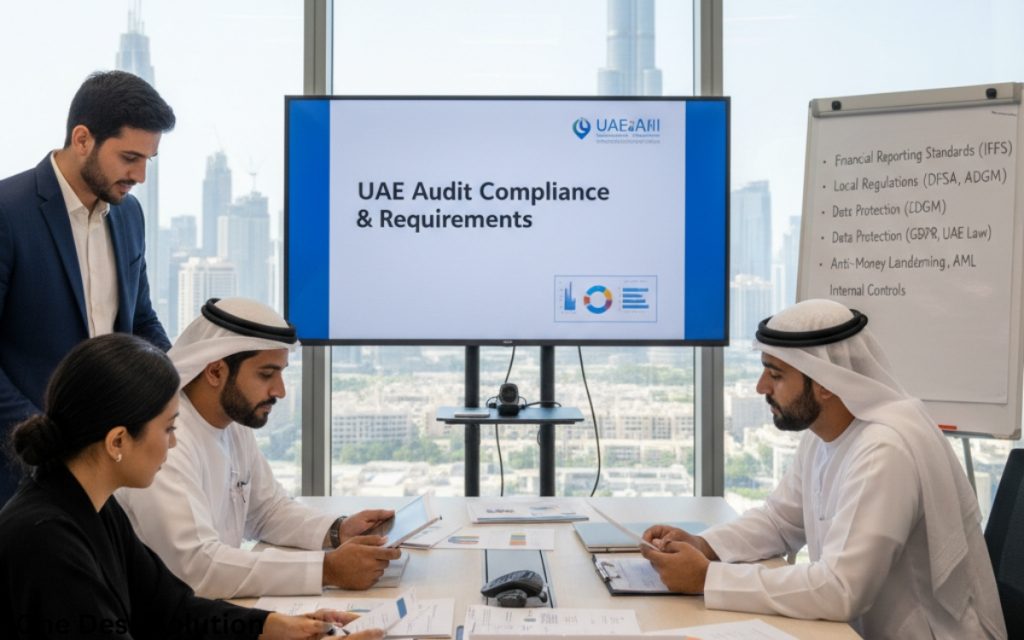
Audit Services for Tech Startups in the UAE
Statutory Requirements, Investor-Driven Audits & What Auditors Actually Scrutinize — 2026 Guide
Quick Summary: Tech startups in the UAE typically need their first audit far earlier than founders expect — not because of company size, but because free zone Corporate Tax status, investor due diligence, and cap table complexity all pull audit requirements forward. Revenue recognition on subscription contracts, ESOP accounting, and related-party transactions with an overseas parent are the areas auditors scrutinize most closely in a tech startup's books. Getting audit-ready early avoids the scramble that often derails funding timelines. This guide breaks down exactly what audit services a UAE tech startup needs, and when.
Founders often assume audits are something that happens once a company is large and established — in the UAE, tech startups frequently need one from year one. A free zone entity relying on 0% Corporate Tax treatment generally needs audited financial statements as a condition of maintaining that status, regardless of company size or revenue.
Layered on top of that regulatory trigger, investors add their own audit expectations. A seed or Series A round often comes with a due diligence process that expects clean, defensible financials, and later rounds almost always require a full statutory audit as a closing condition. Startups that treat their first audit as a box-ticking exercise, rather than planning for it structurally, tend to find it slows down exactly the fundraising process it was meant to support.
This guide covers when UAE tech startups need an audit, what auditors focus on most in a startup's books, and how to get ready. Our audit and assurance services team works with tech startups at every funding stage.
Not sure when your startup needs its first audit?
Table of Contents
- Why Tech Startups Need Audits Earlier Than Expected
- Statutory Audit Requirements for UAE Tech Startups
- Investor & Fundraising-Driven Audit Requirements
- Common Audit Focus Areas for Tech Startups
- Audit Readiness Checklist
- Choosing the Right Audit Firm for Your Stage
- Cost & Timeline Expectations
- Getting Audit-Ready With the Right Partner
- FAQs
1. Why Tech Startups Need Audits Earlier Than Expected
Three separate pressures push tech startups toward an audit earlier than founders typically plan for: free zone Corporate Tax compliance, investor due diligence expectations, and the sheer complexity of startup-specific accounting items like deferred revenue and equity instruments, which are harder to get right without independent review.
2. Statutory Audit Requirements for UAE Tech Startups
| Trigger | Audit Requirement |
|---|---|
| Free zone Qualifying Free Zone Person status | Audited financial statements are generally a mandatory condition to maintain 0% Corporate Tax treatment |
| Mainland LLC (certain thresholds/structures) | Statutory audit requirements can apply depending on legal form and licensing authority rules |
| Free zone license renewal | Many free zone authorities require audited financials as part of annual license renewal, independent of tax status |
| Corporate Tax filing generally | While not all taxpayers require an audit, well-prepared, audit-ready records materially reduce Corporate Tax filing risk |
3. Investor & Fundraising-Driven Audit Requirements
Even where a statutory audit isn't strictly mandatory yet, investors frequently make one a practical requirement before closing a round.
- Seed and Series A investors often request at least a review or limited audit as part of due diligence
- Series B and later rounds typically require a full statutory audit as a closing condition
- Venture debt providers and strategic investors commonly require audited financials before disbursing funds
- Acquirers in an M&A process will almost always require audited historical financials during due diligence
4. Common Audit Focus Areas for Tech Startups
| Area | Why Auditors Focus Here |
|---|---|
| Revenue recognition on subscriptions/contracts | Deferred revenue and multi-period contracts are prone to misapplication of recognition timing |
| Employee Stock Option Plans (ESOP) | Equity compensation valuation and expense recognition are complex and frequently misstated in early-stage companies |
| Related-party transactions | Transactions with an overseas parent, founder-owned entities, or affiliates require arm's length scrutiny |
| Capitalized development costs | Distinguishing capitalizable development spend from routine operating expense requires consistent, defensible policy |
| Convertible instruments (SAFEs, convertible notes) | Classification and valuation of these instruments affects the balance sheet and cap table interpretation |
| Going concern assessment | Pre-revenue or early-revenue startups often require detailed cash runway analysis to support the going concern basis |
5. Audit Readiness Checklist
- Reconcile bank accounts, payment processor accounts, and the general ledger consistently before year-end
- Document revenue recognition policy for subscription or contract-based revenue in writing
- Maintain an up-to-date cap table reflecting all funding rounds, SAFEs, and option grants
- Keep supporting documentation for all related-party transactions, including intercompany agreements
- Track R&D and development costs with clear capitalization vs. expense classification from the start of the year, not retroactively
6. Choosing the Right Audit Firm for Your Stage
| Stage | Typical Audit Firm Fit |
|---|---|
| Pre-seed / seed | A mid-sized, tech-experienced audit firm is usually sufficient and more cost-effective than a Big Four engagement |
| Series A / B | Investors may still accept a reputable mid-tier firm, though some funds have specific auditor preferences |
| Series C+ / pre-IPO | Larger investors, strategic acquirers, or listing requirements often expect a Big Four or comparable top-tier firm |
7. Cost & Timeline Expectations
Audit cost and timeline for a tech startup depend heavily on transaction volume, entity complexity (especially multi-entity structures with an overseas parent), and how audit-ready the underlying records already are. Startups with clean, well-reconciled books going into the audit consistently experience shorter timelines and fewer follow-up queries than those reconstructing records during the audit itself.
8. Getting Audit-Ready With the Right Partner
The most efficient path through a startup's first audit is building audit-ready bookkeeping from the start, rather than treating the audit as a separate, disconnected event. Pairing accounting and bookkeeping services with audit and assurance support, and tax services for Corporate Tax alignment, keeps your financial records consistent across all three.
Get a free audit-readiness assessment for your tech startup.
Frequently Asked Questions
Do UAE tech startups need an audit even if they're pre-revenue?
Often yes. Free zone entities relying on 0% Corporate Tax status generally need audited financial statements as a mandatory condition, and investors frequently request at least a review or audit during due diligence regardless of revenue stage.
What do auditors focus on most when auditing a tech startup?
Revenue recognition on subscription or contract-based sales, ESOP valuation and expense recognition, related-party transactions with an overseas parent, and capitalized development costs are typically the highest-scrutiny areas.
Do I need a Big Four audit firm for my startup's first audit?
Not usually. Seed and Series A stage startups can generally use a reputable, tech-experienced mid-tier audit firm; Big Four or comparable firms typically become expected closer to later funding rounds or a listing process.
How long does a first-time startup audit take in the UAE?
Timelines depend on transaction volume, entity complexity, and how audit-ready the books already are — startups with clean, well-reconciled records going in generally experience noticeably faster audits than those reconstructing data during the process.
Does an audit affect Corporate Tax filing for a UAE tech startup?
Audited financial statements support and strengthen Corporate Tax compliance, and are a mandatory requirement for free zone entities maintaining Qualifying Free Zone Person status, making the audit and tax filing processes closely connected.
Related Reading
Ready to get your tech startup investor-ready and audit-compliant?
Talk to our audit team today.