Internal Audit Consultants Dubai | Professional Internal Audit Services
Published: February 2026 | Last Updated: February 27, 2026 | Reading Time: 14 minutes
Quick Summary
Internal audit consultants in Dubai provide comprehensive audit services, risk assessment, compliance reviews, and governance solutions for businesses of all sizes. Professional internal auditors help organizations identify operational risks, ensure regulatory compliance, improve internal controls, and enhance overall business efficiency. This guide explores the role of internal audit consultants, services offered, selection criteria, and best practices for implementing effective internal audit functions in Dubai and throughout the UAE.
Table of Contents
- What Is Internal Audit Consultancy?
- Role and Responsibilities of Internal Auditors
- Services Offered by Internal Audit Consultants
- Internal Audit Process in Dubai
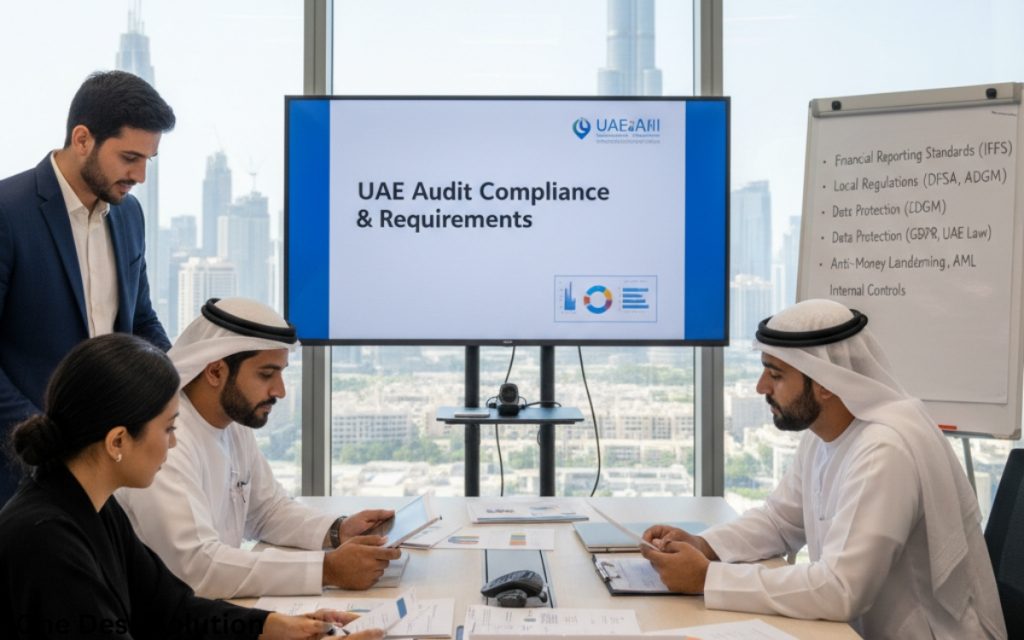
- UAE Regulations & Compliance Requirements
- Why Internal Audit Is Important
- How to Choose the Right Internal Audit Consultant
- Implementation & Best Practices
- Frequently Asked Questions
- Conclusion & Next Steps
What Is Internal Audit Consultancy?
Internal audit consultancy is a specialized service that helps organizations evaluate their internal controls, risk management processes, compliance systems, and operational efficiency. Unlike external auditors who focus on financial statement accuracy, internal auditors provide independent, objective assessments of all business functions and operational areas.
Internal audit consultants in Dubai serve as strategic partners, offering organizations valuable insights into their operational weaknesses, compliance gaps, and risk exposure. These professionals combine accounting expertise, industry knowledge, process analysis, and compliance understanding to deliver comprehensive audit assessments. The primary goal is to help organizations strengthen their governance structure, minimize risks, and improve overall performance.
Dubai's business environment, characterized by rapid growth, regulatory evolution, and international operations, has created increasing demand for professional internal audit services. Organizations recognize that robust internal audit functions are essential for maintaining stakeholder confidence, ensuring regulatory compliance, and protecting organizational assets. Whether you're a multinational corporation, a growing SME, or a public institution, professional internal audit consultancy is a critical investment in organizational health and sustainability.
Need Expert Internal Audit Services?
One Desk Solution provides professional internal audit consulting with experienced auditors and comprehensive risk assessments. Strengthen your controls and ensure compliance today!
Role and Responsibilities of Internal Auditors
Primary Responsibilities
Internal audit consultants in Dubai carry multifaceted responsibilities that extend across organizational operations. Their primary focus is evaluating the effectiveness of internal control systems, assessing compliance with policies and regulations, and providing recommendations for improvement. These professionals maintain independence and objectivity, reporting directly to senior management or audit committees.
Key Responsibilities Include:
- Control Assessment: Evaluating the design and effectiveness of internal control systems across all business functions
- Risk Identification: Identifying operational, financial, compliance, and strategic risks
- Compliance Review: Ensuring adherence to UAE regulations, international standards, and organizational policies
- Process Evaluation: Analyzing business processes to identify inefficiencies and improvement opportunities
- Audit Planning: Developing comprehensive annual audit plans based on risk assessments
- Evidence Collection: Gathering audit evidence through testing, observation, and documentation review
- Reporting: Preparing detailed audit reports with findings, recommendations, and management responses
- Follow-up: Monitoring implementation of audit recommendations and verifying corrective actions
- Stakeholder Communication: Regular communication with management, audit committees, and senior leadership
- Advisory Services: Providing consultancy on control improvements and governance enhancements
Scope of Internal Audit Functions
The scope of internal audit functions is comprehensive, covering all organizational areas. Internal auditors may focus on specific departments, business units, or processes, or take a comprehensive enterprise-wide approach. The scope is determined by organizational size, complexity, risk profile, and strategic objectives.
| Audit Area | Specific Focus Areas |
|---|---|
| Financial Controls | Cash management, accounts receivable/payable, inventory control, fixed assets, payroll systems |
| Information Technology | IT security, data protection, system access controls, disaster recovery, cyber risk management |
| Operational Efficiency | Process optimization, supply chain management, vendor management, resource utilization |
| Compliance & Governance | Regulatory compliance, policy adherence, corporate governance, ethical conduct |
| Risk Management | Risk identification, risk assessment, mitigation strategies, risk reporting |
| Human Resources | Recruitment processes, payroll controls, benefits administration, employee compliance |
| Sales & Revenue | Revenue recognition, sales order processing, customer contracts, billing accuracy |
Services Offered by Internal Audit Consultants
Comprehensive Service Portfolio
Professional internal audit consultants in Dubai offer diverse services tailored to organizational needs. Whether you require a complete internal audit function, specific compliance reviews, or advisory services, experienced consultants can customize solutions to address your unique requirements.
Risk Assessment & Evaluation
Comprehensive risk assessments identifying operational, financial, compliance, and strategic risks. Heat map development and risk prioritization for resource allocation.
Internal Control Audits
Evaluation of control effectiveness across financial, operational, and IT functions. Control design and operating effectiveness testing with recommendations for improvements.
Compliance Reviews
Assessment of compliance with UAE regulations, industry standards, and internal policies. Gap analysis and remediation planning for identified compliance issues.
Operational Audits
Evaluation of operational efficiency, process effectiveness, and resource utilization. Identification of improvement opportunities and cost optimization strategies.
IT & Cyber Audits
Assessment of IT controls, data security, system access, and cyber risk management. Compliance with cybersecurity standards and incident response planning.
Fraud & Forensic Investigation
Investigation of suspected fraud, embezzlement, or irregularities. Evidence preservation and management of investigation proceedings.
Governance Reviews
Evaluation of corporate governance structures and Board effectiveness. Advisory on governance best practices and compliance with international standards.
Special Projects & Advisory
Targeted advisory services on specific business issues. Support for transformation initiatives, system implementations, and organizational changes.
Service Delivery Models
Internal audit consultants offer flexible delivery models to accommodate different organizational needs and budgets. Understanding the various models helps organizations select the most appropriate approach.
| Delivery Model | Description | Best For | Typical Cost |
|---|---|---|---|
| Full Audit Function | Complete internal audit department outsourced to consultant firm | Small to mid-size organizations without in-house capability | AED 8,000-20,000/month |
| Co-Sourced Model | Combination of internal staff and external consultants | Organizations building internal capacity while leveraging external expertise | AED 5,000-15,000/month |
| Project-Based | Specific audit projects or compliance reviews | Targeted audits, one-time assessments, or specific focus areas | AED 10,000-50,000 per project |
| Advisory Services | Consulting on controls, processes, and governance improvements | Organizations seeking guidance on specific issues | AED 400-800/hour |
| Audit Rotation | Periodic audit services on rotating schedule | Organizations with periodic audit needs and budget constraints | AED 15,000-40,000 per audit cycle |
Internal Audit Process in Dubai
Standard Internal Audit Methodology
Professional internal audit consultants in Dubai follow established methodologies based on international standards such as the International Standards for the Professional Practice of Internal Auditing (ISPPIA). This structured approach ensures consistency, quality, and effectiveness of audit engagements.
Audit Planning & Risk Assessment
Develop comprehensive audit plans based on organizational risk profile, strategic objectives, and stakeholder requirements. Establish audit scope, objectives, resource allocation, and timeline. Conduct preliminary risk assessments to prioritize audit areas.
Fieldwork & Information Gathering
Conduct on-site audit activities including interviews with management and staff, observation of processes, documentation review, and system testing. Gather audit evidence to evaluate control design and operating effectiveness.
Analysis & Evaluation
Analyze audit findings against audit criteria (policies, regulations, best practices). Evaluate significance of findings, assess control gaps, and develop risk ratings. Document conclusions and supporting evidence.
Management Discussion
Meet with management to discuss preliminary findings, obtain their input, and understand their perspective. Allow management to explain circumstances and provide additional information. Build consensus on findings.
Report Development
Prepare formal audit report including executive summary, detailed findings, risk ratings, recommendations, and management responses. Use clear language and include supporting schedules and detailed audit procedures.
Management Response & Action Plans
Present findings to management and audit committee. Management develops corrective action plans with timelines and responsible parties. Track management's commitment to implementing recommendations.
Follow-up & Monitoring
Monitor implementation of management's corrective actions. Perform follow-up testing to verify that recommendations have been implemented effectively and risks have been mitigated.
Audit Tools & Techniques
Modern internal audit consultants utilize advanced tools and techniques to enhance audit effectiveness and efficiency. These include:
- Data Analytics: Large-scale data analysis to identify patterns, anomalies, and high-risk transactions
- Audit Software: Specialized audit management and documentation software (IDEA, ACL, Tableau)
- Risk Mapping: Heat maps and risk matrices for visual risk assessment and prioritization
- Process Mining: Advanced process analysis using operational data to identify inefficiencies
- Sampling Techniques: Statistical sampling for efficient evidence collection from large populations
- System Auditing: Testing of ERP systems, accounting software, and IT controls
- Performance Metrics: Development and monitoring of KPIs related to audit findings
UAE Regulations & Compliance Requirements
Regulatory Framework for Internal Audit
Dubai and the UAE have established comprehensive regulatory frameworks requiring organizations to maintain effective internal audit functions. Compliance with these regulations is critical for all businesses operating in the emirate.
Key Regulatory Requirements
| Regulation/Standard | Key Requirements | Applicable To |
|---|---|---|
| UAE Federal Law No. 32 (2021) | Requires listed companies to establish audit committees and maintain internal audit function | Public joint-stock companies listed on exchanges |
| DFSA Standards | Comprehensive internal audit requirements for DIFC regulated entities | DIFC firms and financial institutions |
| CBU Guidelines | Internal audit requirements for banks and financial institutions | Central Bank regulated banks and financial institutions |
| Insurance Authority Rules | Mandatory internal audit functions and reports for insurance companies | UAE-regulated insurance companies |
| IIA Standards | International Standards for Professional Practice of Internal Auditing | Best practice (increasingly required by organizations) |
| ISO 31000 | Risk management standards that include internal audit evaluation | Organizations implementing risk management frameworks |
Mandatory Audit Committee
Listed companies on UAE exchanges are required to establish audit committees composed of independent directors. The audit committee oversees the internal audit function, reviews audit reports, and ensures management addresses audit findings. Internal audit consultants report directly to these committees, maintaining independence from operational management.
✓ Compliance Note for Dubai Businesses
If your organization is listed on DFM, ADX, or NASDAQ Dubai, you are required by law to maintain an internal audit function and establish an audit committee. Engaging professional internal audit consultants ensures regulatory compliance and demonstrates commitment to governance excellence.
Why Internal Audit Is Important for Organizations
Strategic Benefits of Internal Audit
Internal audit consultancy extends far beyond compliance. Professional internal auditors provide strategic value to organizations by strengthening control environments, reducing risks, and enhancing operational effectiveness. Organizations investing in robust internal audit functions benefit from multiple advantages.
Key Benefits Include:
- Risk Mitigation: Early identification and mitigation of operational, financial, and strategic risks before they become critical issues
- Control Effectiveness: Evaluation and improvement of internal controls to prevent errors and fraud
- Regulatory Compliance: Assurance that the organization complies with applicable laws, regulations, and standards
- Operational Efficiency: Identification of process improvements and cost-saving opportunities
- Fraud Prevention: Detection of fraudulent activities and implementation of preventive measures
- Stakeholder Confidence: Increased confidence among investors, regulators, and other stakeholders
- Governance Quality: Enhancement of overall corporate governance and Board effectiveness
- Management Advisory: Valuable insights and recommendations for management decision-making
- Strategic Alignment: Alignment of operations with organizational strategy and objectives
- Organizational Learning: Identification of lessons learned and best practices across the organization
Impact on Financial Performance
Studies consistently show that organizations with effective internal audit functions experience improved financial performance. Better controls reduce losses, improved processes enhance profitability, and risk mitigation protects asset value. Organizations reporting to internal audit consultants typically achieve:
- 15-25% reduction in operational losses through fraud prevention
- 10-20% improvement in operational efficiency through process optimization
- Reduced regulatory penalties and fines through better compliance
- Enhanced credit ratings and lower borrowing costs through improved governance
- Increased investor confidence and higher valuations
The Cost of Not Having Internal Audit
Organizations without professional internal audit functions face significant risks. Undetected frauds, control breakdowns, compliance violations, and operational inefficiencies can result in substantial losses. The cost of discovering and addressing these issues after they occur is typically 10-20 times higher than proactive internal audit investment.
Strengthen Your Organization's Controls Today
One Desk Solution's experienced internal audit consultants help Dubai organizations identify risks, improve controls, and ensure compliance. Protect your assets and enhance governance now.
How to Choose the Right Internal Audit Consultant
Key Selection Criteria
Selecting the right internal audit consultant is critical for the success of your audit function. Multiple factors should be evaluated to ensure the consultant can effectively address your organization's needs and deliver quality audit services.
Essential Evaluation Criteria:
- Professional Qualifications: Verify CIA (Certified Internal Auditor), CPA, or equivalent certifications. Check ongoing professional development and training
- Industry Experience: Look for consultants with specific experience in your industry (banking, insurance, manufacturing, retail, etc.)
- UAE Market Knowledge: Understanding of UAE regulations, business environment, and local compliance requirements
- Company Size & Stability: Ensure the consulting firm is established and financially stable with adequate resources
- Track Record & References: Request references from current and past clients, verify successful audit implementations
- Methodology & Tools: Confirm use of modern audit tools, software, and internationally recognized methodologies
- Team Composition: Ensure experienced audit partners with adequate support staff and specialists
- Independence & Objectivity: Verify consultant maintains independence and can report audit findings objectively
- Communication Skills: Assess ability to communicate clearly with management, audit committees, and stakeholders
- Flexibility & Scalability: Ability to adjust services as organizational needs evolve
Evaluation Process
| Evaluation Step | What to Assess |
|---|---|
| Initial Screening | Review consultant credentials, qualifications, firm size, and general fit with organizational needs |
| Detailed Proposal | Request formal proposal including methodology, team composition, timeline, and detailed fees |
| Reference Checks | Contact references and ask about quality, professionalism, timeliness, and value delivered |
| Interviews | Meet with proposed audit partner and team to assess experience, communication, and understanding of your needs |
| Firm Evaluation | Assess firm infrastructure, quality assurance processes, insurance/indemnity coverage |
| Scope Definition | Finalize audit scope, objectives, timeline, and deliverables with clear written engagement letter |
Comparison with One Desk Solution
One Desk Solution stands out as a leading internal audit consultant in Dubai, offering:
- Team of CIAs and qualified audit professionals with 10+ years experience
- Extensive experience with UAE regulations and DFSA/CBU compliance requirements
- Proven track record serving financial institutions, corporates, and government entities
- Modern audit tools and advanced analytics capabilities
- Flexible service delivery models tailored to organizational budgets and requirements
- Transparent fee structures with no hidden charges
- Client-focused approach with dedicated support and responsive communication
Implementation & Best Practices
Establishing an Effective Internal Audit Function
Implementing an internal audit function requires careful planning and change management. Organizations should follow best practices to ensure the audit function is effective, credible, and respected throughout the organization.
Best Practices for Internal Audit
- Board Support: Secure strong support from Board and audit committee for audit independence and effectiveness
- Clear Charter: Establish internal audit charter defining mission, authority, responsibility, and reporting relationships
- Independence: Ensure audit function reports to audit committee (not operational management) to maintain independence
- Qualified Staff: Employ or engage qualified auditors with relevant certifications and experience
- Risk-Based Planning: Develop annual audit plans based on comprehensive risk assessments
- Clear Standards: Adopt IIA International Standards for Professional Practice of Internal Auditing
- Quality Assurance: Implement quality assurance processes to ensure audit quality and consistency
- Communication: Regular communication with management, audit committee, and external auditors
- Technology: Utilize audit management software and data analytics tools
- Continuous Improvement: Regular evaluation and enhancement of audit processes and methodologies
Common Challenges & Solutions
| Challenge | Impact | Solution |
|---|---|---|
| Lack of Independence | Audit findings compromised, loss of credibility | Report directly to audit committee; maintain separation from operations |
| Limited Resources | Insufficient audit coverage, incomplete assessments | Co-source with external consultants; prioritize highest-risk areas |
| Lack of Management Buy-in | Slow corrective action implementation, reduced impact | Board sponsorship; demonstrate audit value through findings |
| Outdated Tools/Processes | Inefficient audits, slow report delivery, missed risks | Upgrade to modern audit software; implement data analytics |
| Skill Gaps | Limited audit scope, inability to assess complex controls | Continuous training; engage specialists for complex areas |
| Communication Issues | Findings misunderstood, recommendations not implemented | Clear reporting; regular stakeholder meetings; plain language |
Internal Audit Maturity Levels
Organizations should assess their internal audit maturity and progressively enhance their audit function. Most organizations progress through maturity levels as they develop their audit capability and leverage audit value.
- Level 1 (Ad-Hoc): Occasional audits conducted without formal planning or standards
- Level 2 (Defined): Formal audit charter, risk-based planning, but limited resources
- Level 3 (Managed): Consistent audit processes, adequate resources, regular reporting to audit committee
- Level 4 (Optimized): Advanced analytics, continuous auditing, strategic advisory role
- Level 5 (Leading): Integrated risk management, predictive analytics, enterprise-wide strategic partnership
Frequently Asked Questions
Internal Audit and External Audit serve different purposes:
Internal Audit:
- Reports to management and audit committee
- Assesses internal controls, compliance, and operational efficiency across all functions
- Provides ongoing advisory services and continuous monitoring
- Focuses on risk management and process improvement
- Not required to verify financial statement accuracy (though may review financial controls)
External Audit:
- Reports to shareholders and external stakeholders
- Focuses primarily on financial statement accuracy and completeness
- Conducted annually, typically for statutory compliance
- Provides audit opinion on financial statements
- May reference internal audit work but conducts independent assessment
Summary: Internal auditors are internal watchdogs helping management strengthen controls; external auditors are independent verifiers providing assurance to external stakeholders. Both are valuable and often work together to provide comprehensive audit coverage.
Internal audit requirements depend on your company's status:
Mandatory for:
- Listed companies on UAE stock exchanges (DFM, ADX, NASDAQ Dubai)
- Banks and financial institutions regulated by Central Bank of UAE
- Insurance companies regulated by Insurance Authority
- DIFC-regulated entities and licensed financial services firms
- Companies with audit committee requirements under corporate governance rules
Recommended (not mandatory) for:
- Large private companies with complex operations
- Organizations with significant risk exposure
- Companies seeking to improve internal controls and governance
- Organizations operating in regulated industries
- Businesses planning future listing or acquisition
Bottom Line: While internal audit isn't legally required for all companies, regulatory bodies increasingly expect organizations to maintain effective internal audit functions. Even if not legally mandated, professional internal audit significantly strengthens controls and reduces organizational risk.
Internal audit consultancy costs vary based on multiple factors:
Cost Structure Examples:
- Full Audit Function: AED 8,000-20,000/month (outsourced complete function)
- Co-Sourced Model: AED 5,000-15,000/month (combination of internal and external resources)
- Project-Based Audits: AED 10,000-50,000 per audit (single audit projects)
- Quarterly Audits: AED 15,000-40,000 per cycle (periodic comprehensive audits)
- Advisory Services: AED 400-800/hour (consulting on specific issues)
- Risk Assessment Only: AED 8,000-20,000 (one-time risk evaluation)
Cost Factors:
- Organization size and complexity
- Number of audit areas and coverage scope
- Frequency and duration of audit activities
- Specialist knowledge requirements (industry-specific expertise)
- Use of advanced tools and technology
- Consultant experience and qualifications
Investment Perspective: While audit consultancy represents an investment, organizations typically recover this investment 3-5 times through fraud prevention, efficiency improvements, and better risk management. One Desk Solution offers transparent pricing with detailed cost breakdowns—contact us for a customized quote based on your specific needs.
Key Qualifications for Internal Audit Consultants:
Professional Certifications (Most Important):
- CIA (Certified Internal Auditor): The gold standard credential; demonstrates expertise in internal audit practices and standards
- CPA (Chartered Professional Accountant): Indicates accounting and financial control knowledge
- ACCA/ICAEW Qualified: Professional accounting qualifications recognized globally
- Specialist Certifications: CISA (IT audit), CFE (Fraud Examiner), CRMA (Risk Management)
Experience Requirements:
- Minimum 5-7 years internal audit experience (for consultants leading audits)
- Industry-specific experience relevant to your organization
- UAE/Middle East business environment knowledge
- Experience with organizations of similar size and complexity
Technical Skills:
- Strong understanding of internal controls and risk management
- Proficiency with audit software and data analytics tools
- Expertise in relevant regulatory frameworks (DFSA, CBU, etc.)
- Knowledge of international audit standards (IIA ISPPIA)
Soft Skills: Communication, analytical thinking, independence, professional judgment, and stakeholder management are equally important as technical qualifications. Always verify credentials directly and ask about ongoing professional development.
Internal audit timeline depends on engagement scope and complexity:
Planning Phase:
- Risk assessment and audit planning: 1-2 weeks
- Final scope and methodology finalization: 1 week
Fieldwork Phase:
- Small organizations (limited scope): 2-4 weeks
- Medium organizations (moderate scope): 4-8 weeks
- Large organizations (comprehensive): 8-12+ weeks
- Specialized audits (IT, fraud investigations): 4-12 weeks
Analysis & Reporting:
- Analysis and draft report development: 2-4 weeks
- Management discussion and response: 1-2 weeks
- Final report issuance: 1 week
Total Typical Timelines:
- Single audit project: 8-16 weeks
- Quarterly audit cycles: 4-6 weeks per cycle
- Ongoing audit function: Continuous (12+ months typically)
Note: Timelines can be accelerated with adequate resources and organizational cooperation. One Desk Solution provides detailed project schedules with clear milestones and deliverable dates during the engagement planning phase.
Conclusion & Next Steps
The Strategic Value of Internal Audit
Internal audit consultants play a critical role in modern organizations, helping leaders navigate risks, strengthen controls, and achieve business objectives. In Dubai's dynamic business environment, professional internal audit is not just a compliance obligation—it's a strategic imperative for organizational success.
Whether your organization is legally required to maintain an internal audit function or is proactively strengthening its control environment, experienced internal audit consultants provide invaluable expertise. They bring independent perspective, advanced methodologies, specialized skills, and organizational knowledge that internal teams often lack. The investment in professional internal audit typically returns 3-5 times its cost through fraud prevention, efficiency improvements, and better risk management.
Action Plan for Getting Started
- Step 1: Assessment - Evaluate your current internal audit capability and identify gaps or areas needing enhancement
- Step 2: Planning - Define audit objectives, scope, and resource requirements for your organization
- Step 3: Consultant Selection - Identify qualified consultants using the selection criteria provided in this guide
- Step 4: Proposal Review - Request detailed proposals from 2-3 qualified firms and compare capabilities and pricing
- Step 5: Engagement Agreement - Finalize scope, timeline, and fees through a formal engagement letter
- Step 6: Implementation - Begin audit activities according to agreed timeline and methodology
- Step 7: Monitoring - Track management's implementation of audit recommendations and monitor effectiveness
Why Choose Professional Internal Audit
Professional internal audit consultants bring multiple advantages over in-house audit functions or informal approaches:
- Independence: External consultants maintain objectivity and avoid internal politics
- Expertise: Specialized knowledge across industries, processes, and risk areas
- Efficiency: Leverage proven methodologies and audit tools to maximize audit effectiveness
- Scalability: Flexible resources that scale with organizational needs
- Credibility: External audit findings carry higher stakeholder credibility
- Cost Effectiveness: Avoid costs of recruiting and training internal audit staff
✓ Investment in Internal Audit Pays Dividends
Organizations with effective internal audit functions report 65-80% improvement in internal controls, 50-70% reduction in fraud losses, and 30-50% improvement in operational efficiency. These tangible benefits far exceed the investment in professional internal audit services.
Ready to Strengthen Your Organization's Audit Function?
One Desk Solution is your trusted partner for professional internal audit services in Dubai and throughout the UAE. Our experienced auditors deliver comprehensive risk assessments, control evaluations, and strategic advisory services tailored to your organization's unique needs. Let's discuss how we can help enhance your governance and control environment.
Available: Monday-Friday 9 AM - 6 PM UAE Time | Response Time: Within 2 hours
Related Resources & Articles
Explore these comprehensive guides to enhance your business knowledge and governance practices:
- Business Launch Preparation Checklist - Complete Pre-Launch Guide
- What Accounting Services Do Dubai Businesses Need? - Service Guide
- Financial Reporting Requirements in UAE - Compliance Overview
- Dubai Business Accounting Setup Checklist - Implementation Guide
- Monthly Accounting Tasks Checklist for UAE Companies - Recurring Tasks
- How to Choose the Right Business Consultant - Selection Criteria
- Cost of Company Formation in Dubai - Pricing Breakdown
- Certified Accounting Services Dubai - Professional Standards
Our Complete Service Offerings
One Desk Solution provides integrated business solutions across multiple service areas, all designed to support your organization's success: