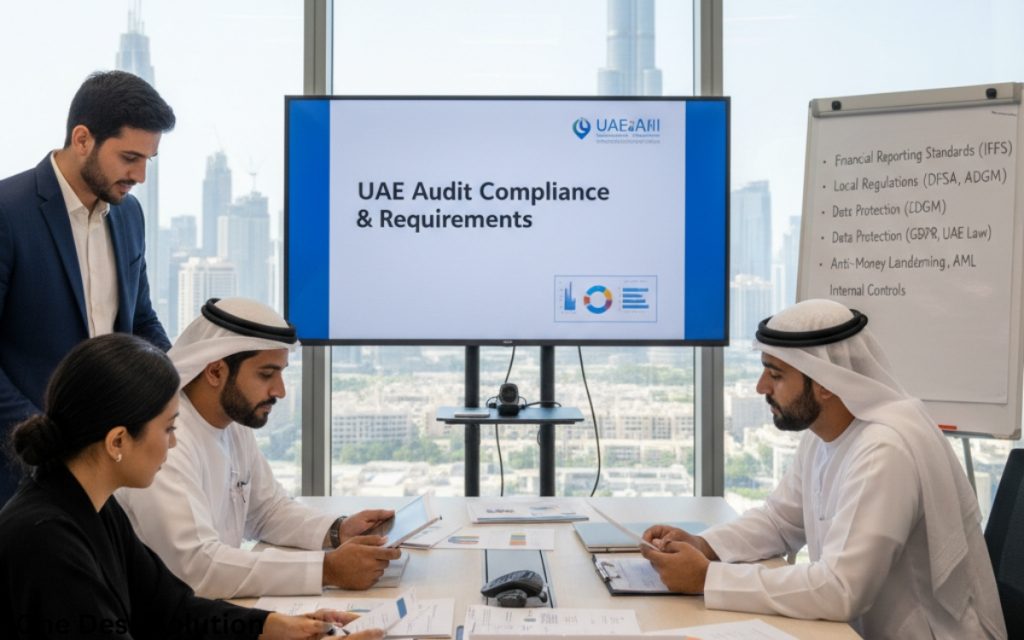
How to Prepare for Ministry Audit Inspections in UAE
The complete 2026 guide for Dubai and UAE businesses — every inspection type, what authorities check, required documents, and a proven preparation strategy to pass every government audit with confidence.
UAE government ministry inspections — from FTA tax audits and MOHRE labour inspections to DED commercial inspections and Municipality health and safety visits — are an increasingly common reality for all businesses operating in Dubai and across the UAE in 2026. The businesses that handle these inspections confidently and come away penalty-free are not the ones that got lucky — they are the ones that prepared systematically in advance. This expert guide covers every type of UAE ministry inspection, what each authority looks for, the complete pre-inspection document checklist, a step-by-step preparation timeline, how to respond correctly during an inspection, and strategies to become permanently "inspection-ready" rather than scrambling at the last minute.
💡1. UAE Ministry Inspection Landscape 2026
The UAE government has significantly increased regulatory enforcement activity across all sectors in 2024–2026. Driven by the UAE's post-FATF grey-listing reforms, the introduction of Corporate Tax, and ambitious economic development goals, federal and emirate-level authorities are conducting more inspections, more frequently, and with greater scrutiny than at any point in UAE business history.
For UAE businesses, this means that government inspections are no longer rare, exceptional events — they are an expected part of the business compliance cycle. The FTA conducts tax audits on VAT and Corporate Tax records. MOHRE (Ministry of Human Resources and Emiratisation) inspects labour law compliance, WPS records, and Emiratisation targets. DED inspectors visit business premises to verify licence compliance and consumer protection. Municipality teams audit health, safety, and environment standards. And free zone authorities conduct compliance checks for their licensees.
The businesses that navigate these inspections successfully share a common trait: they treat compliance as a continuous, year-round operational discipline — not a panic-driven exercise triggered by an inspection notice. This guide gives you the framework, checklists, and expert strategies to join their ranks.
2026 Enforcement Reality: Many UAE ministry inspections — particularly MOHRE labour inspections and DED commercial visits — are unannounced. Inspectors can arrive without notice during normal business hours. The FTA provides a written audit notification, but even then the window for preparation is typically only 5–20 working days. Year-round compliance readiness is the only reliable protection.
🏛️2. Types of UAE Government Inspections
FTA Tax Audit
Reviews VAT returns, Corporate Tax records, transfer pricing, invoices, and financial statements.
MOHRE Labour Inspection
Checks WPS compliance, Emiratisation targets, employment contracts, working hours, and welfare.
DED Commercial Inspection
Verifies trade licence validity, business activity compliance, signage, pricing, and consumer protection.
Municipality Inspection
Inspects health, safety, fire compliance, food safety, environmental standards, and premises hygiene.
MOH / DHA Inspection
Healthcare facilities — licences, staff qualifications, drug storage, medical waste, and patient safety.
Free Zone Authority
Compliance reviews — audit submission, substance requirements, licence activity compliance, office usage.
| Inspection Type | Authority | Advance Notice? | Frequency | Trigger |
|---|---|---|---|---|
| VAT Audit | FTA | Yes — 5–20 days | Risk-based / periodic | Filing anomalies, complaints, sector campaigns |
| Corporate Tax Audit | FTA | Yes — written notice | Annual + risk-triggered | CT return discrepancies, VAT-CT mismatches |
| Labour Inspection | MOHRE | Usually none | Routine + complaint | Employee complaints, industry campaigns |
| Commercial Inspection | DED Dubai | Usually none | Routine + complaint | Consumer complaints, random visits |
| Health & Safety Inspection | Dubai Municipality | Usually none | Annual + random | Food premises routine, complaints, incidents |
| Free Zone Compliance | Free Zone Authority | Sometimes | Annual licence renewal | Audit submission, substance check, complaint |
🧾3. FTA Tax Audit — Detailed Preparation Guide
The FTA tax audit is the most financially significant inspection a UAE business can face. FTA auditors have broad legal powers to examine all tax-related records for up to 5 years retrospectively. A poorly handled FTA audit can result in significant back-tax assessments, penalties of up to 300% of understated tax, and in serious cases, criminal prosecution for tax evasion.
📋 Documents FTA Will Request in a Tax Audit
- All VAT returns (VAT 201) for the audit period — printable from EmaraTax
- Sales ledger and all sales tax invoices for the period
- Purchase ledger and all purchase tax invoices (input tax claimed)
- Bank statements for all UAE accounts for the full audit period
- Revenue reconciliation — accounting system revenue vs. VAT return declarations
- Export documentation for all zero-rated supplies (customs declarations, airway bills)
- Reverse charge calculations for imported services (Google Ads, AWS, overseas consultants)
- Corporate Tax return (CT 201) and supporting workings (if CT period applicable)
- IFRS-compliant financial statements for the audit period
- Transfer pricing documentation (Local File) if related-party transactions exceed AED 3M
- Chart of accounts and trial balance for each financial year under audit
- All FTA correspondence, rulings, and voluntary disclosure records from prior periods
⚡ FTA Audit Red Flags That Trigger Selection
*Indicative — based on UAE tax practitioner experience. FTA does not publish audit selection criteria.
FTA Audit Rights and Timeframe: When the FTA issues an audit notification, you have the right to request reasonable additional time to prepare your records. The FTA typically allows 5 business days minimum before the audit commences. You also have the right to appoint a registered Tax Agent to represent you throughout the audit — which is strongly recommended for any significant FTA audit. Our tax team provides FTA audit representation and preparation support.
Facing a UAE Ministry Inspection?
OneDeskSolution's expert team prepares UAE businesses for FTA tax audits, MOHRE inspections, DED commercial visits, and free zone compliance reviews — ensuring you face every inspection with complete confidence and full documentation.
👷4. MOHRE Labour Inspection — Preparation
MOHRE (Ministry of Human Resources and Emiratisation) labour inspections are typically unannounced and focus on UAE Labour Law compliance, worker welfare, WPS salary payment records, and Emiratisation targets. Violations can result in immediate fines, work permit bans, and public blacklisting on the MOHRE system.
📋 MOHRE Inspection Preparation Checklist
- Valid and signed employment contracts for all employees — filed and accessible
- WPS (Wage Protection System) payment records for all months — salaries paid through WPS, not cash
- Payroll records showing salary amounts, pay dates, and employee details
- Valid work permits and residence visas for all non-UAE-national employees — not expired
- Emiratisation compliance evidence — NAFIS registration, Emirati employee records, target achievement
- Working hours records — overtime documentation if applicable; maximum 48 hours/week compliance
- Annual leave records — entitlements granted per contract and UAE Labour Law
- Accommodation standards (if company provides housing) — inspect against MOHRE worker welfare standards
- Health insurance certificates for all employees — mandatory in Dubai and Abu Dhabi
- End of Service Gratuity (EOSB) calculations and accrual records
- Staff disciplinary records and grievance procedures documentation
- Trade licence displayed prominently at business premises
🏪5. DED Commercial Inspection — Preparation
Dubai Department of Economic Development (DED) inspectors conduct unannounced visits to business premises to verify commercial compliance. These inspections focus on licence validity, business activity compliance, pricing transparency, and consumer protection.
- Valid, unexpired Trade Licence — prominently displayed at the entrance in Arabic and English
- Business activities match exactly those listed on the trade licence — no unlicensed activities
- Price tags and pricing information clearly displayed (retail and food businesses)
- Correct country of origin labelling on all products
- No counterfeit, expired, or substandard products on display or in storage
- Signage in Arabic as required — not solely in English or another language
- Product descriptions and warranties available in Arabic where required
- All promotional offers and sale prices accurately reflected on shelf labels and at POS
- Staff able to communicate basic Arabic or designated Arabic-speaking staff available
- Business owner or authorised manager available on premises during operating hours
🏥6. Municipality & Health Inspections
Dubai Municipality, Abu Dhabi Municipality, and other emirate-level bodies inspect business premises for health, safety, environmental, and food safety compliance. For food businesses, restaurants, and healthcare premises, these inspections are particularly rigorous — failure can result in immediate closure.
- Valid Food Establishment Permit (for food businesses) — displayed and current
- All food handlers hold valid Food Handler Certificates from Municipality
- Food storage temperatures correct — refrigeration logs maintained and accessible
- Kitchen cleanliness standards met — pest control records available
- Fire safety equipment — extinguishers in date, fire exits clear and marked
- Occupational health and safety records — risk assessments, accident register
- Waste disposal records — particularly for healthcare and food businesses
- Staff medical fitness certificates (for food handlers — tested for communicable diseases)
- Building maintenance records — HVAC, plumbing, electrical certifications current
- No construction, renovation, or modification work without proper permits
🏢6. Free Zone Authority Compliance Inspections
Free zone authorities (DMCC, JAFZA, IFZA, RAKEZ, DIFC, ADGM etc.) conduct compliance reviews that may be triggered by licence renewal, audit submission requirements, or substance verification for QFZP Corporate Tax purposes.
| Free Zone | Primary Compliance Check | Key Documents Required | Consequence of Non-Compliance |
|---|---|---|---|
| DMCC | Annual audit submission, substance, activity compliance | Audited accounts, trade licence, office lease, employee records | AED 2,000–5,000 fine + licence hold |
| JAFZA | Audit submission, goods in designated zone, customs compliance | Audited accounts, customs records, warehouse logs, employee contracts | Fines + licence suspension |
| DIFC | DFSA regulatory compliance, AML, client records | DFSA-compliant records, audited accounts, AML policies, client files | DFSA enforcement action |
| ADGM | FSRA compliance, substance, audited accounts | Audited accounts, FSRA regulatory filings, UBO records | FSRA penalties |
| IFZA / RAKEZ | Audit submission, licence activity, office usage | Audited accounts, office lease, employee visas, trade licence | Fines + licence renewal blocked |
📋7. Master Pre-Inspection Preparation Checklist
This master checklist applies across all inspection types — completing these actions keeps your business genuinely ready for any UAE government inspection at any time:
📂 Documents — Always Organised & Accessible
- Trade licence — valid, displayed at premises, and digitally stored
- All employee contracts — signed, filed, and accessible within minutes
- All employee visas, Emirates IDs, and work permits — valid, copies on file
- VAT returns (last 5 years) — printable from EmaraTax on demand
- Accounting records — trial balance, invoices, bank reconciliations, in IFRS-compliant accounting software
- Corporate Tax return and supporting workings (if CT registered)
- WPS payment records — downloadable from MOHRE portal for the last 24 months
- Audited financial statements (last 2 years) — signed by licensed UAE auditor
- All relevant permits (food, health, municipality) — valid and displayed
- Transfer pricing documentation if related-party transactions exceed AED 3M/year
🔧 Operations — Always Compliant
- Business activities strictly match trade licence — no side activities outside scope
- All employees properly registered with MOHRE and on WPS
- Emiratisation targets met (for eligible businesses with 50+ employees)
- Health insurance valid for all employees
- No expired visas or permits for any employee on premises
- Premises used only for licensed activity — no residential use of commercial space
- Signage compliant — Arabic required, no misleading claims
- Fire safety equipment inspected and in-date
- Staff trained on inspection protocol — who to contact, what to say, where documents are kept
🤝8. What to Do During an Inspection
- Welcome Professionally: Greet inspectors calmly and professionally. Ask to see their official identification and note their name, authority, and inspection reference number. Never obstruct access — inspectors have legal authority to enter licensed premises.
- Notify Your Key Contact Immediately: Immediately inform your business owner, senior manager, or designated compliance officer. If you have a PRO or business setup consultant, notify them simultaneously. For FTA audits, contact your tax agent immediately.
- Cooperate Fully and Calmly: Provide the documents requested promptly and accurately. Do not delay or appear evasive — this raises suspicion and can trigger more intensive examination. Cooperate fully with all reasonable requests.
- Do Not Volunteer Unnecessary Information: Answer questions asked directly and accurately. Do not volunteer information not specifically requested. If you are uncertain about a question, say "I will check and get back to you" rather than guessing.
- Document Everything: Keep a written record of what was requested, what was provided, what was said, and what findings were noted. Request copies of any inspection report or notice issued. This documentation is critical for any future appeal or reconsideration.
- Request Time If Needed: If inspectors request documents you do not have immediately available, politely request reasonable time to retrieve them. For FTA audits, you have the legal right to request a short extension. Document this request.
- Review and Respond to Findings: After the inspection, carefully review any inspection report issued. Address violations promptly and within the timeframe specified. If you believe a finding is incorrect, you have the right to appeal — consult your advisor before accepting any penalty.
Golden Rule: Inspectors respond to the attitude and preparedness of the business as much as the actual compliance status. Businesses that are calm, organised, cooperative, and obviously well-prepared consistently receive more lenient treatment of minor issues. Businesses that are defensive, disorganised, or evasive attract deeper scrutiny. Preparation is both a compliance strategy and a risk management strategy.
⚖️9. Common Violations & Penalty Summary
| Violation | Authority | Typical Penalty | Severity |
|---|---|---|---|
| Undeclared VAT / incorrect returns | FTA | 50% of underpaid tax + surcharges | Critical |
| Missing VAT records | FTA | AED 10,000–50,000 | High |
| Employees paid outside WPS | MOHRE | Work permit ban + AED 1,000/employee | Critical |
| No employment contracts | MOHRE | AED 1,000 per employee | High |
| Emiratisation targets not met | MOHRE/NAFIS | AED 6,000/month per missing Emirati | High |
| Expired trade licence | DED | Immediate closure + AED 5,000+ | Critical |
| Unlicensed business activity | DED | AED 5,000–50,000 + closure | Critical |
| No price labelling (retail) | DED / MoECC | AED 1,000–5,000 | Medium |
| Food safety violations | Municipality | Immediate closure + AED 1,000–100,000 | Critical |
| Fire safety non-compliance | Civil Defence | Closure until remedied | Critical |
| Late audit submission (free zone) | Free Zone | AED 2,000–5,000 + licence hold | High |
🌟10. How to Be Always Inspection-Ready
The most effective inspection preparation strategy is building permanent compliance readiness into your business operations — so that any inspection, announced or unannounced, finds your business fully prepared:
Make Your Business Permanently Inspection-Ready
OneDeskSolution provides ongoing compliance management, inspection preparation, internal audit, and regulatory advisory services — so UAE businesses face every government inspection with complete confidence. Contact us for a free compliance assessment.
❓11. Frequently Asked Questions
🔗12. Related Resources
Your UAE Compliance & Inspection Partner
From FTA audit preparation and tax representation to MOHRE compliance reviews, internal audits, and free zone regulatory support — OneDeskSolution provides comprehensive inspection readiness services for UAE businesses at every scale. Contact us today.